Choosing the right deep cycle battery is essential for solar storage, RV power, camping off-grid, or marine setups. This guide highlights five top options, ranging from LiFePO4 and AGM chemistries, to help you compare capacity, safety features, and suitability for cold environments. Each product is evaluated against long life, cycle durability, and practical use in solar systems.
| Product | Chemistry | Nominal Capacity | BMS / Protections | Best For |
|---|---|---|---|---|
| ROSINLI 12V 100Ah LiFePO4 (Group 24) | LiFePO4 | 100Ah | Smart BMS | Solar home, RV, camping |
| Renogy Deep Cycle AGM 12V 200Ah | AGM | 200Ah | Valve Regulated, maintenance-free | Home, RV, off-grid |
| GRNOE 2-Pack 12V 100Ah LiFePO4 (Group 31) | LiFePO4 | 100Ah each | Smart BMS, low-temp protection | RV, marine, solar |
| Feuruetc 12V 200Ah LiFePO4 | LiFePO4 | 200Ah | Built-in 200A BMS | Home energy storage, solar backup |
| VEMDIA 12V 100Ah LiFePO4 Group 31 | LiFePO4 | 100Ah | Built-in 100A BMS, low-temp cut-off | RV, marine, solar storage |
ROSINLI 12V 100Ah LiFePO4 Battery

ROSINLI’s 12V 100Ah Group 24 LiFePO4 battery uses automotive-grade lithium iron phosphate cells for higher energy density and stable performance. It is designed for energy storage rather than engine starting and includes a smart BMS to guard against over-charge, over-discharge, over-current, and short circuits. With a lighter weight of about 22.6 pounds and faster charging, it fits portable solar setups and off-grid applications.
Renogy Deep Cycle AGM Battery 12V 200Ah

The Renogy Deep Cycle AGM battery employs thick absorbent glass mat separators and valve-regulated technology to minimize maintenance, prevent acid leakage, and provide reliable discharge performance. It is not a lithium product but an AGM option with a low self-discharge rate and long shelf life, making it suitable for RVs, cabins, and off-grid systems where maintenance-free operation is valued.
GRNOE 2-Pack 12V 100Ah LiFePO4 Battery

GRNOE offers a two-pack of 12V 100Ah LiFePO4 batteries with a built-in 100A BMS and low-temperature protection. The compact design (about 12.9 x 6.7 x 8.6 inches) yields high energy density in a small footprint and a weight around 22.5 pounds per unit. This setup is well-suited for RVs, boats, and cold-weather off-grid systems, with considerations for charging at 14.6V ±0.2V.
Feuruetc 12V 200Ah LiFePO4 Battery
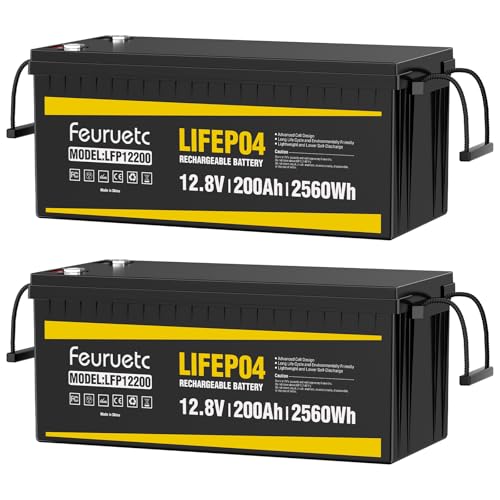
The Feuruetc 12V 200Ah LiFePO4 battery targets robust solar storage and home backup. It features a built-in 12V battery management system that guards against overcharge, deep discharge, overheating, and short circuits, while supporting low self-discharge. Its 10-year lifespan and up to 15,000 cycles at favorable DoD levels make it a strong candidate for long-term solar energy systems.
VEMDIA 12V 100Ah LiFePO4 Group 31

This VEMDIA 12V 100Ah LiFePO4 battery uses a built-in 100A BMS with low-temperature cut-off. Its compact size and weight (roughly 24 pounds) support easy installation in RVs, marine vessels, or solar storage systems. It is designed to deliver stable 12V power, rapid charging, and reliable performance in variable environmental conditions.
Buying Guide: Key Purchase Considerations For Deep Cycle Batteries
When selecting deep cycle batteries for solar storage, consider chemistry, cycle life, weight, size, and climate compatibility. LiFePO4 options generally offer longer cycle life (often 8,000–15,000 cycles) and better thermal stability, making them attractive for home solar storage and off-grid use. AGM batteries provide maintenance-free operation and strong safety margins, but typically offer shorter lifespans than high-quality LiFePO4. For marine or cold-weather setups, low-temperature protection and BMS features become critical to prevent performance degradation or battery damage.
Key considerations include:
- Cycle life and depth of discharge (DoD): Higher cycle counts translate into longer service life under typical DoD settings.
- Battery management and safety features: BMS protections against over-charge, over-discharge, over-current, and short circuits extend life and safety, especially in solar systems with varied charging conditions.
- Weight and physical size: LiFePO4 is lighter and more compact than lead-acid or AGM at similar capacity, affecting install feasibility in tight spaces.
- Temperature performance: Low-temperature cut-off and thermal management improve reliability in cold environments or shaded solar setups.
- Maintenance needs: AGM and LiFePO4 are generally maintenance-free, but LiFePO4 requires careful charging within recommended voltages for optimal longevity.
- System compatibility: Ensure the charger and solar controller are compatible with the chosen battery chemistry and voltage (12V nominal for most of these options).
For solar charging, pairing a high-quality battery with a suitable solar charge controller, and ensuring proper cable gauge and fuse protection, is essential for maximizing efficiency and longevity. Consider your expected daily energy use, peak draw, and climate to choose a battery with the right balance of capacity and cycle durability.