When working with RF systems, ensuring proper impedance matching between 75-ohm and 50-ohm components is essential to minimize signal loss and distortion. This guide highlights reliable adapters that convert 75-ohm coax to 50-ohm connections, suitable for ham radio, TV antennas, and network analyzers. Below, you’ll find five carefully selected products with practical features, helping you choose the right part for your setup.
Summary of Selected Products
| Product | Impedance Match | Primary Use | Key Benefit |
|---|---|---|---|
| Onelinkmore N Type Connector N Male 50Ω to N Female 75Ω Converter | 50Ω (N male) to 75Ω (N female) | High-frequency adapters for RF networks | Reliable impedance bridging with durable materials |
| Fancasee 2-Pack 75Ω to 300Ω Matching Transformer (F Type Female) | 75Ω to 300Ω | TV, satellite, and antenna systems | Effective impedance transformation for legacy coax |
| F Type Male 75Ω to N Female 50Ω Adapter | 75Ω to 50Ω | RF ham, general coax conversions | Stable connection and durable construction |
| 2 Pack F-Type Male 75Ω to N Female 50Ω Adapter | 75Ω to 50Ω | Ham radios, RF testing, portable setups | Two adapters for multi-point conversion needs |
| 2 Pack TV Balun 300Ω to 75Ω Adapter (F Female) | 300Ω to 75Ω | Antenna and RF distribution | Broad compatibility for classic antenna systems |
Onelinkmore N Type 50Ω to 75Ω Converter

The N-type impedance converter from Onelinkmore provides a dedicated 50-ohm to 75-ohm transition, ideal for linking 50-ohm cables to 75-ohm devices in high-frequency networks. The connector features a nickel-plated copper construction, designed for durability in demanding environments. It supports a broad frequency range up to 2.95 GHz and is suitable for cellular, Wi-Fi, and satellite applications. The adapter is built to minimize standing wave effects, maintaining signal integrity across connections while remaining compact for field use.
Fancasee 2-Pack 75Ω to 300Ω Matching Transformer

The Fancasee matching transformer offers a 75-ohm to 300-ohm transformation, commonly used for matching 75-ohm coaxial lines with 300-ohm twin leads in legacy TV and antenna setups. This two-pack accommodates multiple lines or future expansions. The transformer adheres to standard F-type female interfaces, enabling straightforward integration with existing coaxial cabling. While designed primarily for 75-to-300-ohm transitions, it plays a complementary role in multi-impedance environments where 50-ohm segments connect through other adapters.
F Type Male 75Ω to N Female 50Ω Adapter

This adapter converts from an F-type male connector (75 ohms) to an N-type female connection at 50 ohms, bridging common household RF infrastructure with 50-ohm equipment. It emphasizes durable materials and a strong, reliable connection to support repeated installations and field testing. The product is suitable for ham radio setups, test rigs, and installations where 50-ohm equipment must interface with 75-ohm coax that is widespread in consumer gear.
2 Pack F-Type 75Ω to N Female 50Ω Adapter

This 2-pack includes F-type male to N-type female adapters rated for 75-ohm to 50-ohm conversion. The design emphasizes a secure, low-loss connection with robust materials to withstand repeated connections in field and bench setups. It is a practical option for hobbyists and professionals who routinely mix 75-ohm coax with 50-ohm test equipment or transceivers.
2 Pack 75Ω to 300Ω Balun TV Antenna Adapter
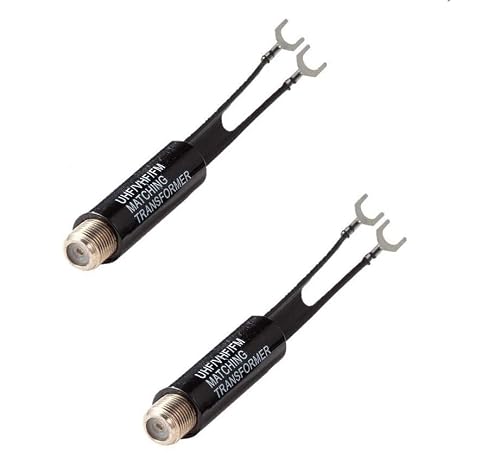
The 2-pack TV balun converts from 300-ohm twin-lead to 75-ohm coax, a common requirement when connecting older or specialized antennas to modern 75-ohm coaxial lines. While not a direct 75-to-50-ohm converter, baluns are an essential part of many impedance-matching chains in RF and antenna systems, helping to bridge legacy hardware with contemporary 75-ohm cabling. They are designed for durable operation in outdoor and indoor installations.
Buying Guide: Key Considerations For Impedance Matching Adapters
- Impedance compatibility: Identify whether your system uses 50-ohm or 75-ohm components, and select adapters that explicitly support the required transition (e.g., 50Ω to 75Ω). Mismatched impedance can cause signal reflections and loss.
- Connector types: Common options include N-type, F-type, and BNC. Choose a connector family that matches your existing cables and equipment to minimize additional adapters.
- Frequency range: Check the adapter’s usable frequency range. Some adapters are rated only for lower frequencies, while high-frequency models handle several gigahertz.
- Power handling: If you’re using power transmitters or active devices, confirm the adapter’s rated power to avoid overheating or damage.
- Durability and materials: Nickel-plated copper cores and durable housings improve longevity in harsh environments. Corrosion resistance is important for outdoor use.
- Mechanical fit and installation: Ensure threading, latching, or quick-connect features align with your cables. Secure, wobble-free connections help maintain signal integrity.
- Usage context: For ham radio, network analyzers, or TV antenna setups, consider whether multiple adapters are needed in a single chain or if a more integrated solution would simplify your layout.
- Cost vs. reliability: While inexpensive adapters exist, investing in higher-quality parts can reduce signal issues and the need for frequent replacements.
- Compatibility with accessories: If you plan to use adapters with test equipment or analyzers, verify compatibility with your device’s ports and connectors.