This article surveys popular Class D amplifier chips and breakout boards that suit hobbyists and developers. Using these compact, efficient modules can power speakers, smart devices, and portable audio systems. Each product below highlights core benefits, key specs, and typical use cases to help you compare options for microcontroller projects, DIY speakers, and embedded audio apps.
| Product | Brand | Key Strength | Voltage Range |
|---|---|---|---|
| GODIYMODULES MAX98357A I2S Breakout | GODIYMODULES | I2S input, on-board amp, compact | 2.7V–5.5V |
| DROK PAM8406 5W+5W Mini Board | DROK | High efficiency, simple mono input | 5V |
| Clyxgs TPA3116D2 2-Channel Board | Clyxgs | High power, integrated protection | DC12–26V |
| Dayton Audio KAB-230v4 | Dayton Audio | 2x30W, integrated Bluetooth aptX HD | Not specified (board-level) |
| Fosi Audio V1.0B | Fosi Audio | TI TPA3116D2, compact Hi-Fi quality | 12V–24V |
GODIYMODULES MAX98357A I2S Class D Amplifier

The GODIYMODULES MAX98357A breakout combines an I2S DAC and a Class D amplifier in one compact module. It accepts standard I2S digital audio input, decodes to analog, and directly drives a speaker. The device runs on 2.7V to 5.5V, making it suitable for portable projects powered by batteries. Built-in thermal and over-current protection helps safeguard both the module and connected hardware, while its small footprint eases integration into compact projects such as handheld speakers and microcontroller-based audio apps.
Key considerations: I2S compatibility with Raspberry Pi, ESP32, and Arduino boards; supply voltage flexibility; integration with single-board computers; thermal management for continuous playback.
DROK 5W+5W PAM8406 Mini Audio Amplifier

The DROK PAM8406 board delivers 5W per channel into 2-ohm loads (5V supply) or 3W into 4-ohm loads. It uses a simple mono input configuration and is built with a robust circuit board and suitable components for reliable performance in DIY speaker projects and compact audio systems. With high efficiency, it provides good output with relatively low heat for standard hobbyist builds and is straightforward to wire into existing speaker setups.
Key considerations: matching speaker impedance with expected output; supply stability and heat dissipation; input wiring for mono sources; ease of mounting in small enclosures.
Clyxgs TPA3116D2 Dual Channel Board

The Clyxgs board uses the TPA3116D2 chip for two-channel Class D amplification with high efficiency (over 90%). It includes an integrated self-protection circuit for overvoltage, undervoltage, overheating, DC detection, and short-circuit protection. The package supports surface-mounted capacitors and is suitable for car audio or home theater applications where robust protection and reliable performance are required. It accepts a DC input in the 12V–26V range and provides solid power with efficient operation.
Key considerations: system voltage compatibility with your power supply; heat management in enclosed spaces; protection features for long-term reliability; enclosure and mounting compatibility.
MusRock MAX98357 AETE I2S Class D Module

The MusRock module provides MAX98357AETE I2S Class D amplification in a compact format. It supports 3.2V–5.5V operation and is suitable for 3.2W into 4-ohm loads with a 5V supply. The design is intended for Raspberry Pi, Arduino, and ESP32 projects, making it a good choice for DIY smart speakers and portable audio devices. The built-in Class D topology emphasizes efficiency and battery-friendly operation, minimizing heat in compact assemblies.
Key considerations: compatibility with your microcontroller platform; efficiency versus output power; battery life implications for portable uses; overall board footprint for tight enclosures.
Dayton Audio KAB-230v4 Class D Amplifier Board

The Dayton Audio KAB-230v4 combines 2 x 30W output with integrated Bluetooth 5.0 featuring aptX HD. This board is designed for quick installations with included power and speaker cables, streamlining the setup for home audio projects and Bluetooth-enabled speaker builds. The aptX HD support offers higher-quality wireless audio, while the Class D architecture helps maintain efficiency in larger room setups. Its compact board form makes it suitable for bookshelf or small living room installations.
Key considerations: Bluetooth audio quality and latency; ease of integration with existing speakers; required licenses or compatibility with Bluetooth devices; power supply requirements for sustained output.
Fosi Audio V1.0B 2-Channel Class D Amplifier
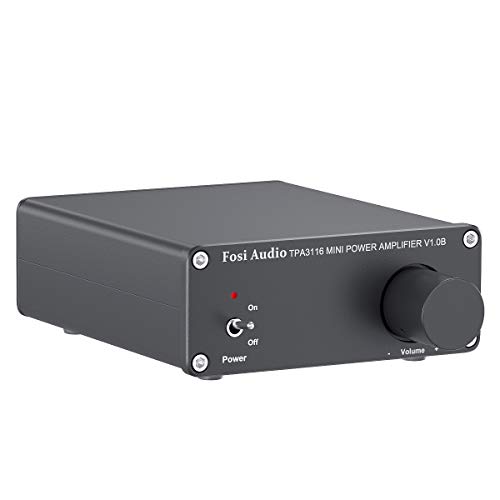
The Fosi Audio V1.0B uses the TI TPA3116D2 chip to deliver a compact, low-noise Class D amplification suitable for home audio systems. It supports a 12V–24V supply, and its integrated protection circuitry helps prevent speaker damage due to short circuits or overcurrent. The aluminum chassis provides robust heat dissipation and a tidy appearance for desktop setups or integrated audio projects. The board is designed to offer clear, silent operation when idle and crisp sound during playback.
Key considerations: supply voltage compatibility; thermal performance in enclosed spaces; noise floor and audible artifacts; compatibility with existing speakers and enclosures.
Buying Guide: Class D Amplifier Chips And Modules
- Power requirements and speaker compatibility: Match the amplifier’s output into your speaker impedance. Low-impedance speakers (like 2-ohm or 4-ohm) demand higher current; ensure your power supply and heatsinking can handle sustained output.
- Voltage range and supply stability: Class D boards vary in their voltage requirements (from about 2.7V up to 26V). Verify that your microcontroller or single-board computer can provide or regulate the needed supply without inducing noise.
- I2S vs analog inputs: I2S-based boards (like MAX98357 variants) simplify digital audio paths from SBCs, reducing DAC noise. If using a microcontroller with PCM or I2S output, I2S breakout boards can simplify integration.
- Protection features and reliability: Look for overcurrent, overvoltage, overheating, and short-circuit protections. These features help prevent damage in hobby builds and prototyping.
- Integration and form factor: For tight enclosures, consider the board’s physical footprint, mounting holes, and aluminum chassis options. Some modules include integrated Bluetooth or jumpers for analog inputs, which can affect enclosure design.
- Efficiency and heat management: Class D is known for efficiency, but high-power configurations still generate heat. Ensure adequate ventilation or heatsinking in larger builds and car installations where space is limited.
- Bluetooth and wireless features: If wireless playback matters, boards with integrated Bluetooth (e.g., aptX HD support) can simplify designs but may add complexity in pairing and latency considerations.
- Ease of assembly: Beginner-friendly boards with clear wiring diagrams and included cables can speed up prototyping. More advanced users may prefer bare ICs for custom PCB designs.