Finding affordable portable power stations that still deliver reliable backup power can be challenging. This guide highlights five cost-effective options that balance size, wattage, and practicality for outdoor adventures, travel, and emergency use. Each model brings distinct strengths, from compact travel-friendly designs to higher-capacity units suitable for home backup. Explore concise product details, what makes each unit stand out, and practical buying considerations to help you choose the right portable power supply for your needs.
Summary table of chosen products (selected for value and versatility):
| Product | Battery / Capacity | Key Feature | Output Highlights |
|---|---|---|---|
| Powkey Portable Power Station (65W, 88.8Wh) | 24000mAh / 88.8Wh | Very compact, multiple recharging options | AC outlet 110V/65W; USB/DC/12V car charging |
| MARBERO Portable Power Station (88Wh) | ≈88Wh | Slim profile with multiple outputs | 8 outputs; AC, USB, Type-C; car DC |
| Wattbricks 120W Peak / 99.2Wh | ≈99.2Wh | Very compact palm-sized design | USB-C 100W, 2x AC; multiple inputs for fast recharge |
| Powkey 200W Portable Power Bank (146Wh) | 146Wh | Higher output for more devices | 2x 110V AC; USB / DC; pure sine wave |
| ZeroKor Portable Power Station (280Wh) | ≈280Wh | Higher capacity for longer outages | 2x 110V AC, DC, USB; MPPT, multiple charging options |
Powkey Portable Power Station With AC Outlet

This compact power station delivers 88.8Wh with a 110V/65W AC outlet, suitable for charging smartphones, tablets, and laptops during travel or on camping trips. It offers three charging methods: from a home wall outlet, a 12V car adapter, or (with a solar panel, sold separately) a solar input, enabling flexible recharging. A built-in LED display lets you monitor battery level in real time. Its portability and light weight make it an appealing backcountry or home backup option.
MARBERO Portable Power Station 88Wh
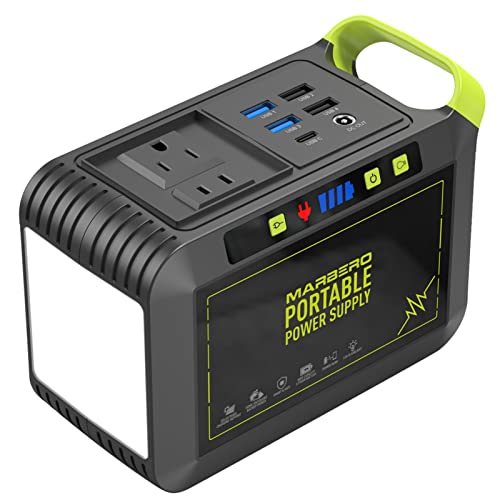
The MARBERO unit emphasizes a slim, portable form with an 88Wh capacity and eight output ports. It supports multiple simultaneous charging methods and is designed for outdoor use, backyard camping, and travel scenarios. The device integrates a protective system to promote safe operation and can power essential devices like phones, tablets, laptops, fans, or small appliances, making it a versatile emergency and travel companion.
Wattbricks 120-Watt Peak Portable Power Station
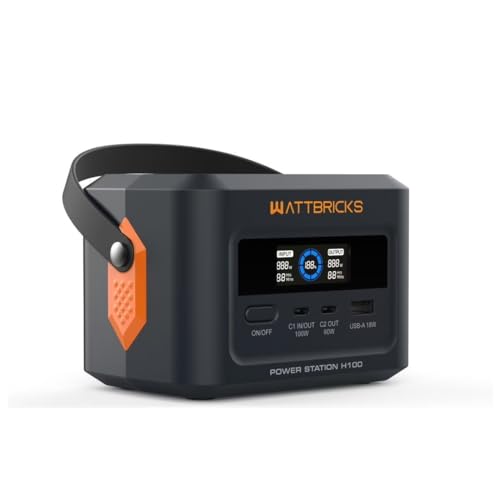
This palm-sized unit offers 99.2Wh of capacity with 120-Watt peak output. It emphasizes compact portability and fast recharging through multiple input ports, making it suitable for quick trips, camping, and as a lightweight travel backup. Its small footprint supports easy transport while providing reliable power for mobile devices, cameras, and small peripherals.
Powkey 200W Portable Power Bank

With 146Wh capacity and dual 110V AC outlets (pure sine wave), this Powkey model targets higher-wattage devices while still staying within a portable form factor. It includes multiple ports (USB, DC) and a fast recharge capability via 15V/2A input. The unit is designed to power lamps, laptops, TVs, mini-fridges, and other small to midsize appliances, making it useful for longer trips, RVs, and emergency use. The pure sine wave output helps protect sensitive electronics.
ZeroKor Portable Power Station 300W

The ZeroKor model offers a higher capacity at 280Wh with a 300W rated output, making it a capable option for more demanding devices and longer outages. It features multiple charging methods, including home AC, DC input, and car charging, and includes USB ports and a DC output. This unit suits more demanding outdoor use, home backup, and RV trips where longer runtime is important, while still maintaining portability and a manageable weight.
Buying Guide
- Capacity vs. weight: Higher Wh means longer runtime but more weight. Choose a balance based on how long you need power and how portable you need the unit to be.
- Output options: Look for a mix of AC outlets, USB-C PD, USB-A, and DC ports to cover phones, laptops, cameras, and small appliances. Consider pure sine wave for sensitive electronics.
- Recharge options: Favor devices with multiple charging methods—wall outlet, car charger, and solar input. Solar compatibility broadens off-grid use, though solar panels are often sold separately.
- Charging speed: Fast recharge inputs (e.g., 15V/2A or higher) reduce downtime between uses. A clear LED/battery display helps monitor status quickly.
- Portability: If you travel frequently, compact dimensions and light weight matter. Ergonomic handles and rugged construction add practicality for outdoor use.
- Safety features: Ensure protection against overcharge, short circuit, over-discharge, and thermal issues via a BMS (Battery Management System). Build quality and certifications matter for reliability.
- Airline and travel considerations: If flying, check airline restrictions and battery capacity limits (often around 100Wh per battery for carry-on) to avoid issues during air travel.
- Price-to-capacity value: Compare Wh per dollar and feature sets. A slightly higher upfront cost can pay off with longer lifespan and more versatile charging options.
- Service and support: Look for warranty terms and readily available customer support in the United States to help with troubleshooting or returns.