For homes with legacy stereo gear and modern Bluetooth devices, converting digital optical or coaxial signals to analog RCA or 3.5mm can unlock richer audio without replacing equipment. This guide highlights top Bluetooth-enabled DAC adapters that bridge optical, coaxial, and Bluetooth inputs to stereo outputs. Each pick balances audio quality, range, and ease of use to suit TVs, amplifiers, and vintage receivers.
- Prospective buyers should consider input options (optical, coaxial, Bluetooth), output formats (RCA, 3.5mm), supported sampling rates, and whether a remote or antenna aids stability.
- All products below are designed to translate digital signals into analog stereo audio, enabling compatibility with traditional amplifiers and speakers.
Product Availability Overview
| Product | Input Options | Output | Notes |
|---|---|---|---|
| PROZOR DAC Converter With Bluetooth 5.0 Remote | Optical/Toslink, Coaxial | RCA L/R, 3.5mm | Remote control included; up to 192 kHz |
| PROZOR 192kHz Digital To Analog With Bluetooth Receiver | Optical, Coaxial, Bluetooth 5.0 | RCA L/R, 3.5mm | Independent volume adjust; 192k/24bit |
| KAIY Bluetooth 5.3 Receiver | Optical, AUX, USB | RCA | 3-in-1 outputs; universal compatibility |
| 1Mii B06TX Bluetooth 5.3 Transmitter | TV optical/coaxial/analog | Headphones/Speakers via Bluetooth | Dual connection; aptX Low Latency |
| OQIMAX / SUYEE / HomeSpot Alternatives | Various (Optical, RCA, AUX) | RCA/AUX/Optical | Good options, but vary by feature depth |
PROZOR DAC Converter With Bluetooth 5.0 Remote

This PROZOR unit combines a DAC with a Bluetooth 5.0 receiver and an IR remote for convenient volume control. It accepts optical Toslink or coaxial inputs and converts to RCA L/R and a 3.5mm jack. The built-in DAC supports 192 kHz sampling rate and 24-bit depth, delivering clear, dynamic sound for TVs, Blu-ray players, and game consoles. The Bluetooth receiver enables wireless streaming from mobile devices to a linked analog amp, making it a versatile bridge between digital sources and legacy speakers.
PROZOR 192kHz Digital To Analog With Bluetooth Receiver
This model emphasizes Bluetooth 5.0 with a dedicated antenna for stable signal transmission. It converts optical or coaxial digital input or Bluetooth audio to stereo analog RCA and 3.5mm outputs. It supports PCM/LPCM formats and offers 192 kHz/24-bit sampling, helping resolve compatibility gaps when connecting modern devices to older amplifiers. Ideal for upgrading living room audio without rewiring speakers.
KAIY Bluetooth 5.3 Receiver For Home Stereo

KAIY’s device upgrades legacy stereo systems with Bluetooth 5.3, providing 3-in-1 output options: RCA, AUX, and Optical. It supports USB flash drive playback in addition to Bluetooth streaming, broadening source compatibility. The product emphasizes low-latency streaming and stable connections within typical indoor ranges, making it a practical choice for living rooms and home theaters.
PROZOR DAC Converter With Remote 192kHz

This PROZOR model blends a 192 kHz DAC with a Bluetooth 5.0 receiver and a remote for convenient volume and input control. Optical Toslink or coaxial digital inputs translate to analog RCA L/R and 3.5mm outputs. A key feature is the IR remote, letting users switch input sources and adjust volume from a distance, beneficial for setups where the DAC sits near a couch or seating area.
1Mii B06TX Bluetooth 5.3 Transmitter

1Mii focuses on wireless transmission from TV or other source devices to Bluetooth headphones or speakers. It is a transmitter (not a receiver) with Bluetooth 5.3. It supports outputs through RCA, AUX, Optical, and Coaxial inputs, enabling plug-and-play expansion of a wired setup into wireless audio. The dual-connection capability allows two Bluetooth devices to pair simultaneously, promoting shared listening experiences while watching TV or gaming.
HomeSpot Bluetooth 5.3 Transmitter Adapter

HomeSpot offers a Bluetooth 5.3 transmitter with optical, 3.5mm, and RCA outputs. It’s designed to work with TVs and home theaters, ensuring audio and video stay in sync with aptX compatibility. It converts wired outputs into wireless signals, providing flexibility for wireless listening without replacing speakers or receivers.
SUYEE Bluetooth 5.3 Receiver for Home Stereo
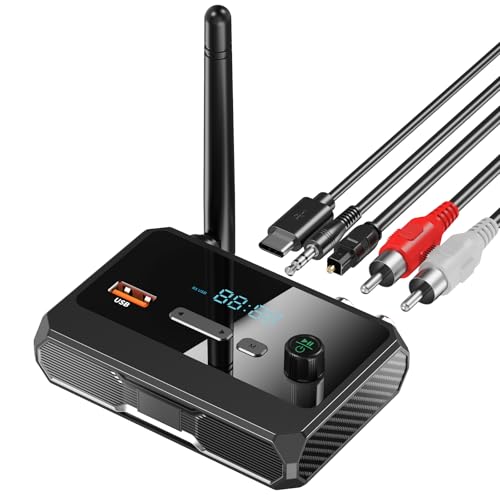
SUYEE’s receiver focuses on wireless streaming to existing wired systems, featuring Bluetooth 5.3 along with RCA, 3.5mm, and Optical outputs. It supports USB drive playback for local music, providing a flexible bridge between digital libraries and analog speakers. The device targets users seeking straightforward expansion of their stereo with minimal setup friction.
OQIMAX Bluetooth 5.1 Receiver

OQIMAX offers a 5.1 Bluetooth receiver with optical, RCA, and AUX outputs, plus USB drive compatibility. It emphasizes a multi-platform approach for converting optical digital audio to analog, enabling seamless audio from television or Blu-ray players to analog stereo systems. It also highlights a compact form factor suitable for desktop or cabinet placement.
Buying Guide: Key Considerations For Bluetooth To Digital Optical Audio Adapters
- Inputs and outputs: Match optical/coaxial digital inputs with your player and choose outputs that fit your amplifier or receiver (RCA or 3.5mm). Some models also offer USB drive playback for local music.
- Bluetooth version and range: Bluetooth 5.x versions provide more stable connections and greater range (often 30–65 feet indoors). Consider dual-antenna designs for better indoor performance.
- DAC quality and sampling rate: A DAC supporting up to 192 kHz/24-bit generally yields higher fidelity for music and movies. Look for chips or specs that mention PCM/LPCM compatibility.
- Remote control and quick access: If the device sits away from the listening area, a remote or volume control can be a big convenience. Some units also provide on-device controls.
- Latency considerations: For TV viewing or gaming, low latency (aptX Low Latency or similar) helps keep audio synchronized with video. Transmitters often emphasize this feature more than receivers.
- Setup complexity: Some adapters are plug-and-play with automatic pairing, while others require manual selection of inputs or pairing modes. Check for included cables and user guides.
- Power and portability: Some devices are USB-powered or include batteries for portable use, while others require a wall adapter. Consider the placement and available outlets.
- Future-proofing: If you anticipate upgrading components, choose an adapter with multiple input types and robust wireless performance to accommodate new devices.