Discover top Bluetooth-enabled home theater systems that bring cinema-style sound to your living space. This guide highlights five standout choices, balancing power, versatility, and ease of use. Each option supports wireless streaming, multiple input sources, and room-filling audio to enhance movies, music, and gaming.
| Product | Brand | Key Benefit |
|---|---|---|
| Pyle PDA77BU | Pyle | High power with karaoke-focused features |
| Onkyo HT-S3910 | Onkyo | Compact 5.1 with 4K/HDR and DTS support |
| Donner MAMP4 | Donner | 5.1 channels, Bluetooth 5.3, versatile inputs |
| Bobtot Home Theater | Bobtot | 6.5″ subwoofer, 800W peak, dual surround modes |
| Pyle PDA8BU | Pyle | 5-channel with sub-out and USB/SD |
Pyle Bluetooth Home Stereo Amplifier Receiver PDA77BU

Pyle’s PDA77BU delivers a robust 800W peak power, designed to drive home theater setups with punch. It features Bluetooth 5.0 for wireless streaming, plus digital inputs and a mic-ready Karaoke mode for events or gatherings. The dual mic inputs offer independent control for crowd engagement, while LED indicators help monitor volume and effects. This model suits larger living rooms or dedicated media spaces seeking strong dynamics and karaoke versatility.
Onkyo HT-S3910 Home Audio Theater Receiver

The Onkyo HT-S3910 package combines a 4K-ready AV receiver with a 5.1 speaker system. It supports Bluetooth streaming, DTS playback, and Dolby formats to create immersive surround effects. The setup aims for straightforward integration with modern TVs while improving dialog clarity and soundtrack depth. This option suits buyers who want a balanced, all-in-one solution without a complicated configuration process.
Donner MAMP4 Stereo Receiver

The Donner MAMP4 focuses on a 5.1 channel configuration with 1000W peak power and Bluetooth 5.3 connectivity. It features multiple input modes, including USB, RCA, mic inputs, AUX, and FM radio, plus optical and coaxial outputs for TV compatibility. Aimed at movie nights and small home theaters, this model emphasizes flexible source options and clean power delivery for mid-sized rooms.
Bobtot Home Theater Surround System
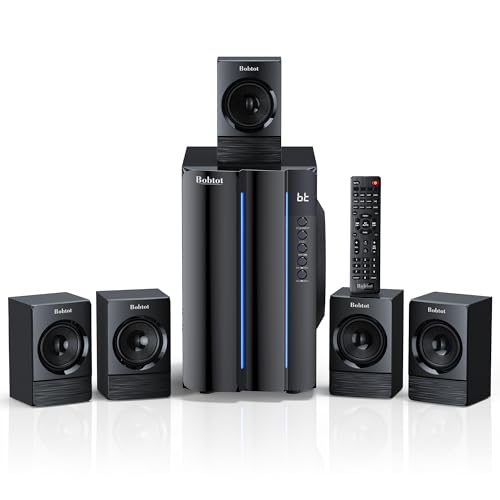
Bobtot offers an 800W peak power home theater system with a 6.5-inch subwoofer and a 5.1-channel surround setup. It supports Bluetooth Bluetooth V5.3 for wireless streaming and includes multiple input options such as ARC/Optical/Coaxial, AUX, USB, and more. This model prioritizes strong bass performance and flexible placement for an immersive living-room cinema experience.
Pyle Bluetooth 5.1 Amplifier PDA8BU
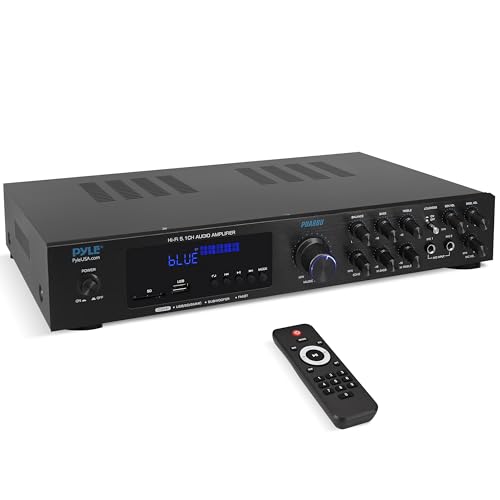
The Pyle PDA8BU provides 300W of total system power across five channels, with Bluetooth 5.0 for wireless streaming. It includes USB/SD inputs and two mic inputs with echo for karaoke or announcements. Compatible with 4/8/16-ohm speakers, it is suited for smaller rooms or layered audio setups wanting a compact, feature-rich receiver with streaming and media input options.
Buying Guide
- Power and room size: Match amplifier wattage to room size. Bigger rooms benefit from higher peak power and robust speaker arrays, while smaller spaces may prioritize clean, controlled sound at lower volumes.
- Speaker configuration: Consider 2.1, 5.1, or 6-channel setups. 5.1 and 6-channel systems provide immersive surround effects ideal for movies and gaming, while 2.1 can suffice for casual listening.
- Input and connectivity: Look for Bluetooth 5.x, USB/SD, optical/coaxial, and optional mic inputs. Ensure compatibility with your TV, streaming devices, and mobile devices.
- Room acoustics and placement: Place speakers to optimize soundstage; consider a subwoofer for deep bass. Wireless connectivity can reduce clutter but may introduce latency in some configurations.
- Feature set: Karaoke/mic inputs, remote control, EQ controls, and remote apps can add convenience. Assess whether you need built-in radio, auto loudness, or color-changing LEDs.
- Reliability and support: Check warranty length and availability of spare parts. Systems from established brands generally offer better long-term support and easier troubleshooting.
- Future expansion: If you anticipate upgrading, choose systems with standardized speaker impedance and scalable configurations to accommodate additional speakers or subwoofers.