Astro-enthusiasts and casual observers alike can enjoy striking lunar detail with the right binoculars. This guide highlights five binoculars and related gear designed to reveal the Moon’s craters, maria, and subtle surface features. From powerful astronomical models to kid-friendly starters, you’ll find options that optimize light transmission, stability, and ease of use for moon viewing and twilight stargazing.
Summary of chosen products:
| Product | Brand | Type | Key Benefit |
|---|---|---|---|
| Celestron SkyMaster 15-35×70 | Celestron | Zoom Binoculars | Versatile long-range lunar views with tripod compatibility |
| Sogries 20×80 Astronomy Binoculars | Sogries | Large-Objective Binoculars | Bright, detailed celestial views with low-light performance |
| MaxUSee 70mm Travel Telescope + 10×50 Binoculars | MaxUSee | Refractor + Binoculars | Dual-purpose kit for lunar and terrestrial viewing |
| BlueCabi 8×21 Kids Binoculars | BlueCabi | Compact Kids Binoculars | Lightweight, easy handling for young explorers |
| NightWatch: A Practical Guide to Viewing the Universe | Firefly Books | Educational Book | Reference for sky observing and Moon features |
Celestron SkyMaster 15-35×70 Zoom Binoculars

The Celestron SkyMaster series provides large 70mm objective lenses and a 15-35x adjustable zoom, enabling detailed views of the Moon’s features at high magnification. BaK-4 prisms maximize light transmission for brighter lunar images, especially near dawn or dusk. A ¼”-20 tripod adapter supports stable, long-exposure lunar observations when mounted on a compatible tripod. This kit is suited for serious moon gazing and outdoor astronomy enthusiasts seeking flexible magnification and solid stability.
Key features include:
– Powerful 15-35x zoom with large 70mm objectives
– Tripod compatibility for steady, long-distance viewing
– BaK-4 prisms for brighter, sharper lunar images
Sogries 20×80 Astronomy Binoculars

The Sogries 20×80 astronomy binoculars deliver powerful celestial viewing with large 80mm objectives and 20x magnification. The BaK-4 prisms enhance light transmission, producing bright and detailed views of the Moon and deep-sky targets. They are designed to work with a tripod (included 1/4″ thread) to minimize vibration during extended lunar sessions, making them ideal for twilight to night sky observations.
Key features include:
– 20×80 magnification with large 80mm objective lenses
– Tripod compatibility for stability
– BaK-4 prisms for bright, crisp lunar images
MaxUSee Travel Telescope With 70mm Refractor and 10×50 Binoculars
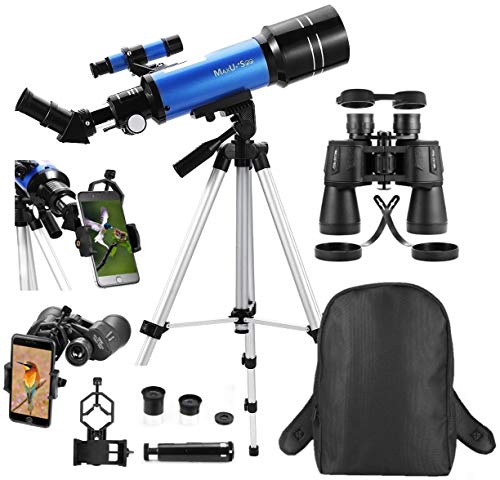
This dual kit includes a 70mm refractor telescope optimized for lunar viewing and 10×50 full-size binoculars for broad sky surveys. The telescope’s 45-degree diagonal prism allows erect images for easier Moon observation, while the binoculars provide a wide field of view for contextual lunar framing. A universal smartphone adapter enables capturing Moon imagery, expanding the observing experience for beginners and travelers who want quick moon photography.
Key features include:
– 70mm refractor telescope for bright lunar details
– 10×50 binoculars for versatile night sky viewing
– Smartphone adapter for celestial imaging
BlueCabi 8×21 Kids Binoculars

BlueCabi’s compact binoculars are designed for young explorers and beginner sky watchers. With 8x magnification and a compact 21mm objective, they offer easy handling, a non-slip grip, and rubber eye protection for safety during field use. While not a high-power astronomy tool, these binoculars are a practical entry point for observing the Moon’s near side, craters, and phases in daylight or dusk outings.
Key features include:
– Lightweight, kid-friendly design
– Comfortable, anti-slip grip and rubber eye protection
– 8x magnification suitable for beginners and daytime Moon views
NightWatch: A Practical Guide to Viewing the Universe

NightWatch offers a practical, illustrated approach to amateur astronomy, including Moon observing tips, constellation locating, and equipment guidance. This reference complements hands-on binocular use by helping readers identify lunar features, phases, and optimal viewing conditions. It’s a valuable companion for those building a Moon-focused observation routine.
Buying Guide: Moon Viewing Considerations
When selecting binoculars or a kit for Moon observing, consider these perspectives:
-
<li aperture versus portability: Larger objectives capture more light for dim lunar detail but add weight. Balance between image brightness and ease of carrying.
<li magnification and stability: Higher magnification reveals finer features but amplifies hand shake. Tripod compatibility or a stable mount is essential for crisp Moon images, especially at 15x–35x.
<li optical quality: BaK-4 prismatic glass improves light transmission and edge sharpness. Seek models with fully multi-coated lenses for clearer views.
<li field of view and ease of use: For Moon observing, a comfortable eye relief and ergonomic design help maintain alignment during longer sessions.
<li versatility and accessories: Tripod adapters, carry cases, and smartphone adapters expand use from Moon viewing to terrestrial monitoring and photography.
<li safety and age considerations: For younger observers, lightweight, shock-absorbing bodies reduce fatigue and risk of accidental drops.
<li budget-to-performance balance: Intermediate options (like 15–35×70) offer powerful lunar detail, while compact 8×21 models are good for beginners or travel.