Finding an Android smartwatch with reliable Wi-Fi can improve connectivity when your phone isn’t nearby. The following selections cover a range of budgets and features, including Google’s Pixel Watch lineup, Samsung’s Galaxy Watch series, and capable 4G models from LOKMAT and Rainbuvvy. Each option supports Wi‑Fi, GPS, and robust health features, helping you stay connected and informed throughout the day.
| Product | Brand | Wi‑Fi / Cellular | Key Focus |
|---|---|---|---|
| Google Pixel Watch 3 | Wi‑Fi | Fitbit integration, running insights | |
| LOKMAT 4G Smart Watch | LOKMAT | 4G + Wi‑Fi | Standalone calling, rotating camera |
| Samsung Galaxy Watch 5 (Renewed) | Samsung | Wi‑Fi + 4G LTE | Sleep coaching, durable display |
| Google Pixel Watch 2 | Wi‑Fi | Advanced health sensors, AI features | |
| Rainbuvvy 4G Smart Watch SL8541E | Rainbuvvy | 4G + Wi‑Fi | Rotatable camera, GPS positioning |
The following sections highlight five top choices with a concise look at features, design, and connectivity. Each entry is structured to help you compare at a glance and decide which Android smartwatch with Wi‑Fi best fits your daily routines and health goals.
Google Pixel Watch 3: Fitbit‑Powered Fitness On Wear OS

The Pixel Watch 3 blends Wear OS with Fitbit’s health insights for runners and everyday metrics. Its 45mm display is brighter and larger, improving visibility of stats during workouts. Real‑time running guidance, form tracking, and personalized recommendations powered by Google AI help tailor workouts to individual goals. The device supports 24‑hour battery life in typical use and is built with a focus on comfort and durable materials, including a matte black aluminum case and Obsidian band for everyday wear.
LOKMAT 4G Smart Watch: Independent Connectivity And Camera
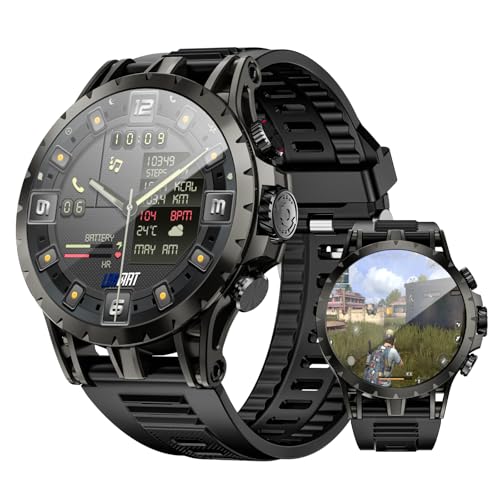
LOKMAT’s 4G standalone smartwatch brings independent calling and broad network compatibility, letting you stay connected without a phone. The large 1.508‑inch AMOLED screen delivers clear visuals, while a 5MP rotatable camera supports photos and video calls. With 3GB RAM and 32GB storage, it accommodates apps and media, backed by 2.4GHz Wi‑Fi and Bluetooth for steady connections. This model targets users who value true standalone functionality and on‑the‑go communication alongside fitness tracking.
Samsung Galaxy Watch 5 (Renewed): Sleep Coaching And Durability

This renewed Galaxy Watch 5 offers a balance of style and performance with a 1.4″ Super AMOLED display and Exynos W920 processor. It supports Wi‑Fi and cellular connectivity, a robust battery, and a sapphire crystal like face for durability. Advanced sleep coaching analyzes nightly patterns to guide better rest over a five‑week framework. It’s suited for users who want a premium Wear OS experience with strong sleep and health features, backed by Samsung’s ecosystem.
Google Pixel Watch 2: AI‑Enhanced Fitness And Safety

The Pixel Watch 2 introduces upgraded sensors for heart rate, skin temperature, and stress monitoring. A 100% recycled aluminum housing adds lightweight comfort, while Google AI integrates with Fitbit to deliver refined activity tracking and insights. The battery lasts through a full day of use with improved efficiency, and the always‑on display helps keep essential information readily visible. This option emphasizes health analytics and a seamless Google ecosystem connection.
Rainbuvvy 4G Smart Watch SL8541E: Global Connectivity On Your Wrist

Rainbuvvy’s 4G smartwatch focuses on independent network access and GPS navigation with a rotatable camera for flexible photography. The 1.75″ AMOLED display provides a broad canvas for apps, messages, and maps, while a built‑in SIM slot enables full cellular use. Wi‑Fi complements the cellular connection, creating versatile connectivity for travelers and busy lifestyles where a phone may not be readily accessible.
Buying Guide: Key Considerations For An Android Watch With Wi‑Fi
- Connectivity options: Consider models with Wi‑Fi, Bluetooth, GPS, and optional 4G/5G to ensure you stay connected when your phone isn’t nearby. Decide if standalone calling is important for your use case.
- Operating system and ecosystem: Wear OS integrates well with Google services and popular health apps like Fitbit. Battery optimization, app availability, and companion app quality matter for long‑term satisfaction.
- Health sensors and tracking: Heart rate, sleep tracking, skin temperature, stress monitoring, GPS accuracy, and advanced running metrics vary by model. Choose sensors that align with your fitness goals.
- Display quality and durability: AMOLED panels offer vibrant visuals; consider brightness, readability in sunlight, and protective glass (sapphire or Gorilla Glass) for daily wear and workouts.
- Battery life and charging: Look for practical day‑to‑day endurance and charging speed. Some models report a full day of use in typical conditions; others may offer longer life in optimized modes.
- Storage and performance: Ample RAM and internal storage support seamless app use and media playback. Ensure the device handles animations and health data without lag.
- Water resistance and ruggedness: If you swim or train in varied conditions, water resistance ratings (IPXX or ATM) and robust builds matter for durability.
- Price and longevity: Consider refurbished or renewed devices for cost efficiency, balanced with battery health and warranty coverage. Evaluate future software support and feature updates.
- Compatibility with other devices: Ensure compatibility with your Android phone, fitness services, and preferred apps to maximize value.