If you’re chasing classic analog warmth and polyphonic depth, 8-voice synthesizers offer a versatile path between vintage character and modern performance. This guide highlights prominent 8-voice analog synths and related gear that can expand your sound palette—from hands-on control layouts to multi-timbral capabilities. Below you’ll find five strong options, a quick product summary, and a buying guide to help you match features to your musical goals.
| Product | Brand | Voice Count | Key Features |
|---|---|---|---|
| Behringer PRO-800 | Behringer | 8 | 2 VCOs per voice, classic VCF/VCA, arpeggiator, sequencer |
| MOOG Muse | MOOG | 8 | Bi-timbral, 64-step sequencer, 256 patches |
| Korg KingKORG NEO | KORG | 24 Voices | 24 voices, 16-band vocoder, 8-step arpeggiator |
| Oberheim OB-X8 | Sequential | 8 | 2 SEM/OB-X lineaged VCOs, OB-X lineage filters |
| Other notable | Various | — | Compact and versatile options for on-the-go or studio use |
Below are five carefully selected options that align with the 8-voice analog philosophy, each bringing distinct strengths in voice architecture, modulation capabilities, and performance features.
Behringer PRO-800 Classic Analog 8-Voice

The PRO-800 clones a Prophet-600 style analog voice architecture with a pure analog signal path. It offers two voltage-controlled oscillators per voice, a classic VCF and VCA, plus an arpeggiator and a sequencer. This model emphasizes fat, detuned, and vintage-tinged poly sounds suitable for lush pads and aggressive arpeggios. Its 8-voice architecture makes it practical for chordal textures and expressive lead lines in live and studio contexts.
MOOG Muse 8-Voice Bi-Timbral Poly Synth
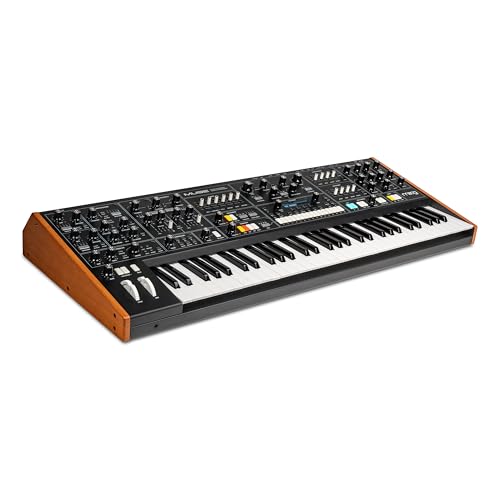
MOOG Muse delivers eight analog voices with two VCOs per voice, a modulation VCO, dual VCFs, and stereo VCAs for a full, kinetic analog sound. Built to inspire both studio production and live performance, Muse combines discrete oscillators with a saturating mixer and a dual transistor ladder, reflecting classic MOOG modular sensibilities. Its front panel emphasizes an intuitive layout with substantial control for quick sonic shifts, making it a strong centerpiece for modern analog exploration.
Korg KingKORG NEO

KingKORG NEO combines a 24-voice hybrid engine with three oscillators per voice, offering 138 oscillator/filter types to cover a wide sonic spectrum. It includes a 16-band vocoder and an 8-step arpeggiator. The XMT Sound Engine provides faithful analog-style reproduction of classic synth tones while maintaining practical software-like editing efficiency for performance and production contexts. It suits players seeking rich voices with modern usability.
Oberheim OB-X8

OB-X8 is an 8-voice polyphonic analog synth with SEM/OB-X lineage VCOs per voice and OB-X-inspired Multimode filters. Its 61-key FATAR velocity- and touch-sensitive keyboard supports expressive performance, while the familiar SEM lineage filters deliver bold, harmonically rich character. This instrument prioritizes authentic vintage voice consonance and tiered modulation opportunities for cinematic pads and punchy bass lines alike.
Synth-a-Sette: Pocket Analog Synth

Synth-a-Sette offers a compact, pocket-friendly entry into analog synthesis. This tiny device provides a monophonic interface with a 13-key touchpad, octave shift, and built-in speaker. It’s ideal for students, hobbyists, or as a portable sketchpad for song ideas. While not a full 8-voice poly instrument, its presence in a list of analog options highlights accessibility for on-the-go sound design and educational contexts.
Behringer RHYTHM DESIGNER RD-6-BB

While primarily a drum machine, RD-6-BB adds analog rhythm textures to a poly-focused setup. It features 8 drum sounds, a 64-step sequencer, and distortion effects, with USB/MIDI connectivity. It’s a complementary piece for players who want to blend analog timbres with percussion-led grooves in a cohesive studio workflow.
Arturia Analog Factory Experience
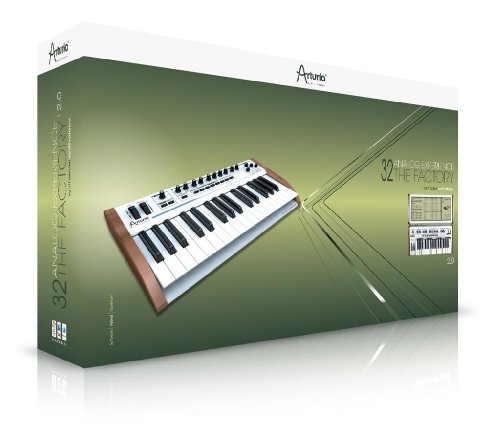
Arturia Analog Factory Experience provides a vast library of analog synth sounds, with 3,500 presets that draw from classic models. It emphasizes straightforward editing and essential parameters for personalizing sounds. While not strictly a hardware 8-voice unit, it complements hardware by offering a deep, versatile software palette that can be used in tandem with hardware poly synths to shape sounds and performances.
Buying Guide: Key Purchase Considerations
- Voice architecture and polyphony: Decide if you need true 8-voice polyphony per instrument or if 16-voice or multisystem setups are preferable for your workload.
- Oscillators and filters: Consider whether you favor classic two-oscillator per voice configurations or more complex, three-oscillator engines for wider timbres. Filter design (ladder, SEM-style, multimode) shapes the character and movement of sounds.
- Modulation and sequencing: Look for robust LFOs, envelopes, matrix modulation, and built-in sequencers or arpeggiators to craft evolving textures and rhythmic ideas.
- Performance controls: Evaluate keyboard feel, velocity sensitivity, aftertouch, and assignable knobs/sliders for hands-on playability during live sets or studio sessions.
- Presets and memory: Patching capacity, patch storage, and user banks matter for rapid sound changes during gigs or production sessions.
- Compatibility and workflow: Assess MIDI/USB connectivity, polyphony expansion options, and how well the instrument fits with your DAW, other synths, and effects.
- Size, weight, and portability: For studio setups or live rigs, balance between a full-featured flagship and a more compact, portable option.
- Resale value and support: Consider brands with strong service networks and community support, which can impact long-term investment value.
When choosing, map features to your primary use: studio production, live performance, or educational contexts. If you primarily want vintage character with modern reliability, prioritize analog signal paths, authentic VCO/VCF behavior, and hands-on control. If you need deep sound design and timbral versatility, focus on engines with multiple oscillators, extensive modulation, and a broad preset library.