Finding the right 6-digit seven-segment display can simplify timing, counters, clocks, and measurement projects. This guide highlights practical 6-digit modules that use TM1637 or MAX7219 drivers for easy connection to microcontrollers. Each option prioritizes simple wiring, compatibility with 5V logic, and clear, readable characters. Explore a curated selection to match your project requirements, from plug-and-play modules to compact boards designed for embedded systems.
| Product | Key Benefit |
|---|---|
| LiebeWH 6 Digit 7 Segment Display Module | TM1637 driver, simple two-wire IO |
| AOICRIE 6 PCS MAX7219 8-Digit Module | Cascading 8-digit displays, 5V/3.3V compatible |
| Acogedor 0.56 Inch 6-Digit Display | Compact 6-digit tube with TM1637 |
| Fafeicy 2 Pcs 6-Digit 7 Segment Display | TM1637 driven, red digits, plug-and-play |
| Srliya 6 Digit Yellow Display Module | TM1637 driver, yellow LED tubes |
LiebeWH 6-Digit TM1637 Display Module

The LiebeWH 6 Digit 7 Segment Display Module uses a TM1637 driver, enabling straightforward control through a two-pin digital IO connection. The board features a clean PCB layout and a pin header for easy integration with microcontrollers. It emphasizes simple wiring and fast setup, making it suitable for clock faces, counters, and measurement readouts in hobbyist and education projects. The module’s compact form supports compact enclosures or project boxes.
PATIKIL 6-Pack 7-Segment 1 Bit Red Modules

PATIKIL provides a 6-pack of red, 1-bit 7-segment displays with common cathode configuration. Each unit features plug-and-play operation, reducing wiring effort. These modules are compact and designed for precision readability in electronic driver boards. They are noted for strength and reusability, making them suitable for multi-channel displays in devices like meters and timer panels.
AOICRIE MAX7219 8-Digit Display Module (Pack of 6)

This module uses the MAX7219 LED driver to control up to eight digits with three IO pins, enabling 5V/3.3V compatibility. The board supports cascading to create longer displays and provides flicker-free operation. It’s well-suited for microcontroller projects requiring multiple digits, such as digital clocks, counters, and measurement dashboards. Built-in copper pads help prevent shorts and improve reliability in crowded prototypes.
Srliya 6 Digit Yellow TM1637 Module

The Srliya model uses a TM1637 driver and presents six digits with yellow LED segments. It emphasizes plug-and-play convenience and a straightforward wiring approach. The PCB design is optimized for easy mounting and compatibility with standard 2-pin IO connections, making it suitable for compact clocks or counters in educational kits or hobby projects.
PATIKIL 6-Pack Common Anode Red 7-Segment Modules
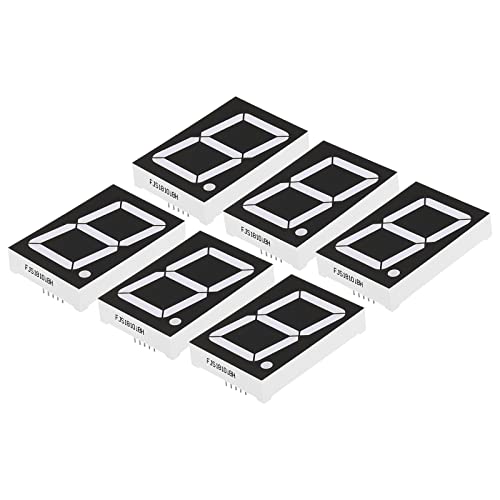
These 6-pack PATIKIL displays are common anode, 3.6V modules with plug-and-play ease. They share the same compact footprint and 1.5-inch character height, making them ideal for dashboards, timers, and scoreboards. The plug-and-play nature means quick prototyping without extensive wiring, while the common anode configuration supports straightforward wiring in multi-digit arrangements.
Fafeicy 2 Pack 6-Digit TM1637 Red Displays

The Fafeicy modules come as a two-pack, featuring red LED digits driven by TM1637. They emphasize versatile application, with a compact build for easy integration into machinery and devices. The unit is aimed at straightforward displays for readouts and status indicators, with a focus on simple installation and visual clarity.
Buying Guide: What to Consider When Choosing a 6-Digit Seven-Segment Display
- Driver IC: TM1637 versus MAX7219. TM1637 is typically simpler for single-module projects with two-wire IO, while MAX7219 supports cascading multiple digits for larger displays and multi-digit configurations.
- Voltage and Logic Level: Most modules operate at 5V, some accept 3.3V logic. Verify your microcontroller compatibility to avoid level-shifting issues.
- Digit Height and Readability: Character height and LED color affect readability in different environments. Red and yellow LEDs are common; white LEDs offer higher contrast in bright settings.
- Wiring and Mounting: Look for plug-and-play designs with header pins for easy soldering or breadboard use. Consider PCB layout quality and available mounting holes for enclosure fit.
- Phase and Brightness: Some modules provide adjustable brightness or require separate resistors. Ensure the module’s brightness aligns with your application to prevent eye strain or display washout.
- Casing and Package: Single-digit vs. multi-pack options, common anode vs. common cathode, and whether a module comes with a pre-soldered header can influence assembly time.
- Expansion Needs: If your project requires more digits later, consider drivers that support cascading displays or easy addition of extra boards.
- Durability and Reusability: Modules described as durable or reusable are favorable for prototypes and educational kits where frequent disassembly occurs.
These considerations help compare modules across driver types, wiring complexity, and expansion potential. For hobbyists building clocks, counters, or measurement readouts, selecting a module aligned with your microcontroller and enclosure constraints will streamline development and ensure clear, reliable displays.