Whether you’re building a portable power supply, reviving dead batteries, or powering microcontroller projects, a reliable 5V step up converter is essential. This guide highlights five top-rated 5V boost modules and related MT3608-based boards, explaining how they work, their features, and practical uses. Each product section includes a quick overview, key specs, and implementation tips to help you choose the right boost converter for your needs.
| Product | Brand | Output Range | Input Range | Approx. Current |
|---|---|---|---|---|
| Dorhea MT3608 DC-DC Step Up | DORHEA | 5V-28V | 2-24V | Up to 2A |
| Teyleten Robot Multi-Function Mini Boost Module | Teyleten Robot | 5V/8V/9V/12V | Unknown | 1.5A |
| Comidox Step Up Module | Comidox | 5V | 0.9-5V | ~480 mA |
| FERWOH MT3608 Boost Module | Ferwooh | 5V-28V | 2-24V | Up to 2A |
| AITRIP Type-C MT3608 Boost Module | AITRIP | 5V-28V | 2-15V | Up to 2A |
Dorhea MT3608 DC-DC Step Up Boost Power Converter
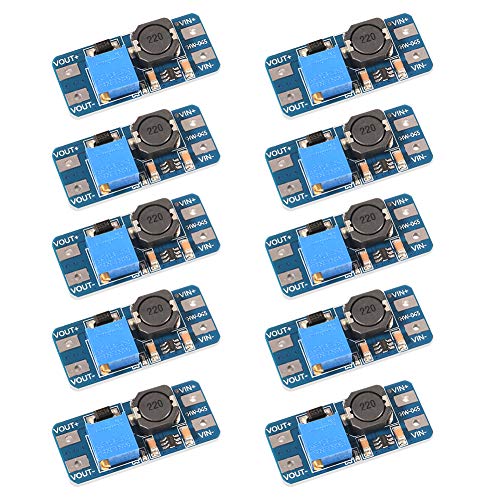
The Dorhea MT3608-based module supports input from 2V to 24V and provides adjustable output in the 5V to 28V range. It relies on the MT3608 chip with high efficiency, typically up to 93%. It is commonly used to power storage batteries, DIY power supplies, and various industrial applications requiring voltages like 5V, 9V, 12V, or 28V. This pack includes multiple units for bulk projects and quick prototyping.
Teyleten Robot Multi-Function Mini Boost Module

Designed for compact DIY projects, this mini boost module supports 5V, 8V, 9V, and 12V outputs with a small footprint (22 × 11 × 3.6 mm). The default operating voltage is 12V, and users can adjust the output by modifying solder pads on the PCB. The module is suitable for small-scale power tasks and quick voltage changes in tight spaces, with an LED indicator to confirm operation.
Comidox 0.9-5V To 5V Step Up Converter

This DC-DC boost converter accepts very low input voltages (0.9-5V) and delivers a stable 5V output with up to about 480 mA. It operates at 150 kHz, offering a balance of compact size and decent efficiency. It is a practical choice for 1S to 2S Li-ion battery-powered projects, small embedded systems, and hobbyist experiments needing a reliable 5V rail.
Ferwooh MT3608 DC-DC Step Up Boost Module

Ferwooh’s MT3608-based module supports an input range of 2V to 24V and can deliver up to 28V at the output, with a typical efficiency near 93%. It includes protections such as under-voltage lockout, current limiting, and thermal protection to prevent damage during overloads. This makes it a robust choice for DIY power supplies, portable devices, and hobby electronics where voltage flexibility is needed.
ACEIRMC 3-Pack XL6019 Boost Modules
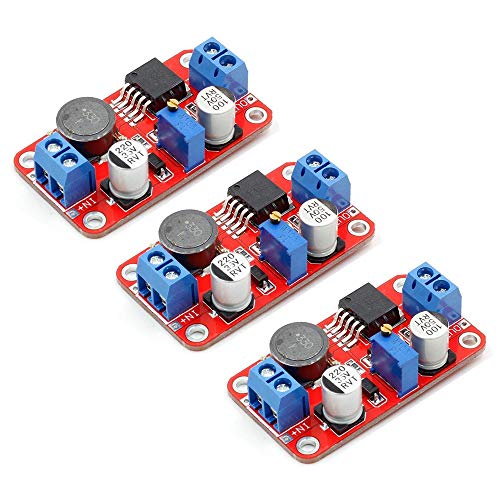
ACEIRMC provides a 5A class boost module based on the XL6019 chipset, offering stronger current capabilities for higher-demand projects. Suitable for projects requiring higher voltage transformation (up to 40V on the output) and more robust load handling. Adjust the blue potentiometer to set the desired output and verify with a multimeter for precise regulation. This trio-pack is useful for classroom labs or multiple simultaneous builds needing higher current margins.
DROK 5V to 12V Step Up Converter

This module converts 5–11V inputs to a fixed 12V output with up to 3A continuous current (36W). It’s well-suited for car electronics, radio equipment, LED displays, and solar charging setups where a stable 12V rail is needed. The module is designed for reliable operation in demanding environments, offering a high-efficiency boost with practical ruggedness.
AITRIP Type-C MT3608 Boost Module

This Type-C powered MT3608 boost module offers a convenient USB-C input for easy integration with modern devices. It supports output adjustable up to 5V-28V with a maximum current around 2A and efficiency above 93%. It’s a practical solution for quick power-ups, portable electronics, and hobby projects where USB-C is the preferred input method.
Buying Guide
Key purchase considerations
- Output voltage range: Ensure the converter can supply the voltage your project requires (commonly 5V, 9V, 12V, or higher up to 28V).
- Input voltage range: Check that your power source falls within the module’s supported input window.
- Maximum output current: Choose a unit with enough headroom for your load; higher current modules are better for motor or LED array projects.
- Efficiency and heat: Higher efficiency reduces heat and battery drain; MT3608-based boards typically offer 85–93% efficiency.
- Protection features: Look for under-voltage lockout, current limiting, and thermal protection to guard components.
- Physical size: For compact projects, micro or mini boost modules are preferable; ensure the form factor fits your enclosure.
- Ease of adjustment: Some boards use potentiometers; others require soldering pads or USB-C interfaces. Plan your tuning method accordingly.
- Application environment: Water/dust resistance and rugged designs are worth considering for automotive or outdoor use.
Comparison at a glance
- Best for high-current needs: XL6019-based ACEIRMC modules (up to 5A).
- Best for compact builds: Small MT3608-based boards like Dorhea or Ferwooh variants.
- Best for USB-powered projects: Type-C MT3608 modules offering convenient USB-C input.
- Best for robust automotive or rugged use: DROK 5V to 12V with higher current capability and environmental resistance.
When selecting a 5V step up converter, balance your voltage target, current draw, and the available input supply. For prototyping, a PCB with adjustable output and clear voltage readouts reduces tuning time. For production or field use, prioritize reliability features, higher current capacity, and protective circuitry to ensure stable operation across varying loads and temperatures.