For builders and creators seeking true 4K output and capable 3D performance, selecting the right video card matters. This guide highlights five graphics cards that align with 4K display goals, multi-monitor setups, and solid 3D workloads. Each option offers different strengths—from entry-level 4K readiness to multi-output professional configurations—so you can match your needs with a solid balance of price and capability.
| Product | Brand | 4K / 3D Capabilities | Key Strength |
|---|---|---|---|
| MSI GT 1030 4GD4 OC | MSI | 4K capable, DirectX 12 | Low-profile, compact form factor |
| VisionTek Radeon HD 7750 2GB | VisionTek | 4K UHD content, multi-monitor up to 6 displays | Professional multi-display potential |
| SRhonyra GT 730 2GB | SRhonyra | HDMI outputs for multi-monitor setups | Low power, easy multi-monitor expansion |
| WAVLINK Quad 4K HDMI Monitors Card | WAVLINK | 4K@60Hz per port, extends to four displays | DisplayLink driven, simple multi-monitor |
| WAVLINK 8K/4K PCIE Card | WAVLINK | 4K and 8K support with DP/HDMI mix | High-resolution versatility, multi-output |
Note: The list focuses on cards that enable 4K output and multi-monitor setups, suitable for gaming, video editing, and professional workflows. While the capabilities vary, all options provide broader 4K compatibility than typical entry-level GPUs.
MSI Gaming GeForce GT 1030 4GD4 OC
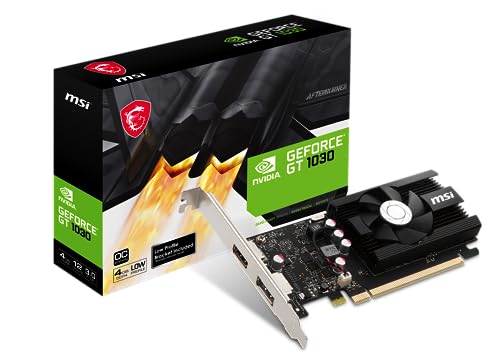
The MSI GT 1030 4GD4 OC provides a compact option for users seeking 4K-capable performance in a low-profile form. It features 4GB DDR4 memory and a 1430 MHz boost clock, delivering reliable 3D acceleration for everyday 4K tasks and light gaming. The card supports DirectX 12 and modern display interfaces, making it a practical choice for small builds or HTPC setups that require 4K output without a large PCIe footprint.
VisionTek Radeon HD 7750 2GB GDDR5 – 4K Ready
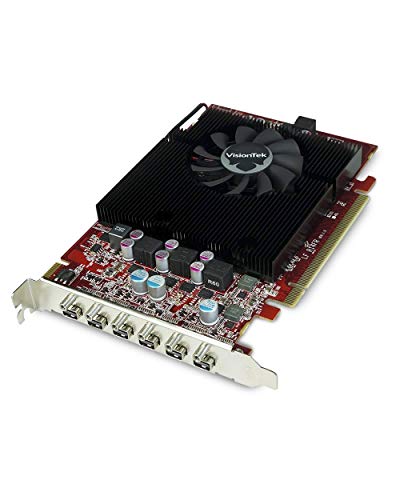
This Radeon HD 7750 card supports 4K UHD content and up to six displays via its multi-monitor capability. It’s well suited for multi-monitor professional setups, healthcare or finance dashboards, and immersive content viewing. With 4K output and broad OS compatibility, it serves as a flexible option for users who prioritize display real estate and stable performance across several screens.
SRhonyra GT 730 2GB – Quad HDMI

The SRhonyra GT 730 offers four native HDMI outputs, enabling quad-monitor setups for productivity or flight sims where independent displays are valuable. It runs at low power (no extra power connector required) and supports 64-bit operation, making it an accessible upgrade for small form factor builds that require multiple screens without heavy power demands.
WAVLINK Quad 4K HDMI Monitors Card
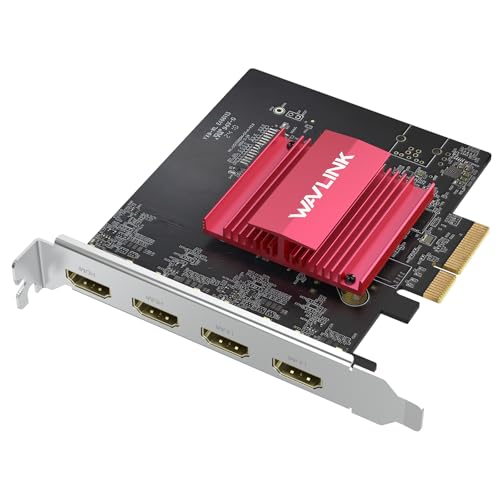
This WAVLINK model delivers four HDMI outputs, each supporting 4K at 60Hz, ideal for a four-display workstation or entertainment rig. Powered by DisplayLink DL7400, it is designed for light office tasks and multimedia work, with straightforward driver installation and broad compatibility. It is not a gaming-focused GPU but excels as a multi-monitor display solution in productive environments.
WAVLINK 8K/4K PCIe Card

This WAVLINK card supports 4K and 8K resolutions with a mix of 2 DisplayPorts and 2 HDMI ports, offering high-resolution versatility for multi-display setups. It uses DisplayLink delivery for extended outputs and provides extend and mirror modes, suitable for professionals needing expansive screen real estate for design, editing, or trading workflows. It also uses a DL7400 chipset for reliable performance across screens.
Glorto GeForce GT 730 4G Low Profile

The Glorto GT 730 4G is a low-profile GPU option with multiple outputs, including HDMI and DP. It’s positioned as an entry-level solution for 4-monitor expansion in compact builds, supporting Windows 11. It offers reliable basic 3D acceleration and multi-output capability for small form factor systems and basic 4K-ready tasks, though performance scales with resolution and workload.
Delkin Devices 128GB Power Micro SD Card UHS-II

While primarily a storage solution, Delkin’s 128GB Power microSD card supports high-speed data capture for 8K, 4K, and HDR workflows in cameras and devices that require fast, reliable memory. It’s designed for professional-grade performance, high endurance, and durability, ensuring swift transfers for large media files in creative work pipelines.
Maxsun AMD Radeon RX 550 4GB ITX

The Maxsun RX 550 ITX card offers a compact, power-efficient option with 4GB GDDR5. It targets 1080p gaming and creative work, with DirectX 12 support and a small form factor ideal for tiny builds. While not a top-tier 4K performer, it provides a reasonable baseline for users prioritizing small size and energy efficiency alongside capable 3D acceleration.
Buying Guide: Key Purchase Considerations And Comparisons
- Resolution goals: If your primary aim is 4K output across one or multiple displays, prioritize GPUs with confirmed 4K support and sufficient video memory. Multi-monitor setups benefit from cards with multiple outputs and stable driver support.
- GPU architecture and age: Newer architectures generally offer better efficiency and driver support for modern applications. However, lower-profile, older cards can still satisfy light 4K tasks or multi-monitor needs at a lower cost.
- Memory and bandwidth: More VRAM (4GB or more) helps with 4K textures and larger workflows. Consider cards with 4GB to 8GB for smoother 4K editing and gaming in modern titles.
- Display outputs: Check the available interfaces (HDMI, DisplayPort, DVI) and ensure compatibility with your monitors. Some cards support up to four displays, which is ideal for extended workspaces.
- Power and form factor: Low-profile and ITX designs suit compact builds, housing constraints, or home theater setups. Ensure your power supply and case can accommodate the card.
- Driver stability and software: Cards leveraging DisplayLink or robust AMD/NVIDIA drivers tend to deliver fewer compatibility issues in daily tasks and multi-monitor configurations.
- Use case balance: For gaming at 4K, dedicated gaming GPUs with higher memory bandwidth outperform entry-level cards. For professional multi-monitor or video editing workflows, prioritize multi-output capability and reliability over raw frame rates.