Discover compact, highly customizable keyboard kits designed for 40% layouts and similar small form factors. This guide highlights five popular kits, covering features like hot-swappability, VIA/QMK programmability, wireless options, and smart displays. Whether you’re building a minimal desk setup or exploring advanced macro and lighting controls, these kits offer scalable options for Mac and Windows users alike.
| Product | Layout | Notes |
|---|---|---|
| EPOMAKER Luma40 | 40% | Low-profile, CNC aluminum, wireless options, VIA/QMK ready |
| YMDK Split Keyboard Corne V4.1 | 40% (Corne 46-key) | Split design, hot-swappable PCB, DIY assembly |
| Keychron Q9 | 40% | 52-key ultra-compact, aluminum body, QMK/Launcher support |
| GTSP M87 Kit | 75% | Gasket mounted, RGB, NKRO, hot-swappable options |
| GMK104 Barebones Kit with Screen&Knob | Full-size footprint | Smart display, volume knob, VIA programmable |
EPOMAKER Luma40 Low Profile Mechanical Keyboard

The Luma40 is a low-profile 40% keyboard designed for minimal desk setups. It features a CNC-cut aluminum chassis that delivers a refined aesthetic and robust build. The 40% layout emphasizes a compact footprint, while the semi-transparent frosted keycaps diffuse RGB lighting for a subtle glow. Its ortholinear approach is paired with an ergonomic design that reduces finger travel, making it comfortable for long sessions. The keyboard supports VIA and QMK, enabling comprehensive key remapping, macro creation, and lighting customization. Optional wireless connectivity includes 2.4 GHz and Bluetooth, with a USB-C wired mode for universal compatibility.
YMDK Split Keyboard Corne V4.1
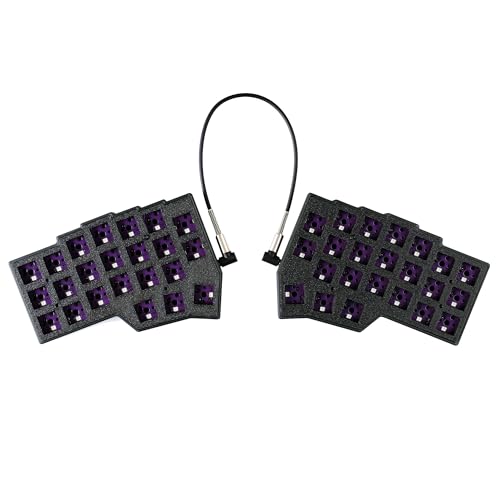
The Corne V4.1 split keyboard offers a 40% layout with additional ergonomic separation to reduce wrist strain. It arrives as a kit that requires user-supplied switches and keycaps, enabling a fully customized typing experience. The kit includes bottom and top PLA components, a hot-swappable PCB, and a USB-C connection. The material choices emphasize environmental friendliness and easy future repairs. With QMK/VIA compatibility, you can program layers, macros, and complex lighting effects, making it suitable for programmers and writers who value efficiency and personalization.
Keychron Q9 52-Key 40% Layout Keyboard

The Keychron Q9 is a premium 40% layout keyboard featuring a full CNC-machined aluminum body and a double-gasket design for refined acoustics and feel. It’s wired with a Type-C connection but supports multi-device use via QMK/Launcher, allowing per-key remapping, macros, and layer customization. The kit targets users who want a compact, highly tactile experience without sacrificing programmability or macro depth. It’s designed for both Mac and Windows, and includes OS-specific keycaps for easy switching between environments.
GTSP M87 75% Custom Barebones Kit

The M87 kit presents a compact 75% layout with gasket mounting, aimed at users seeking a balance between functionality and footprint. It features silent operation with foam and silicone dampening, and hot-swappable switch compatibility for 3-pin/5-pin MX-style switches. NKRO support ensures reliable, ghost-free key registration. The kit supports a quiet yet expressive typing experience, suitable for gaming and long typing sessions. It’s a flexible option for hobbyists who want to customize without committing to a larger form factor.
ZMX GMK104 Barebones Keyboard Kit

The GMK104 barebones kit is a full-size option with a built-in smart display and a metal volume knob. It’s VIA programmable, enabling full 104-key customization, macros, and lighting control. While it departs from the 40% theme by offering a full-size footprint, its advanced features suit power users who want immediate on-device interactivity and a high degree of customization through software. The kit is ideal for users who value real-time feedback and hands-on control of lighting and backlight behavior.
Buying Guide
Key considerations when selecting a 40% or compact mechanical keyboard kit:
- Layout and footprint: Decide between 40% and slightly larger 46–75% forms. Consider desk space, portability, and task requirements (coding, gaming, typing comfort).
- Programmability: Look for VIA or QMK compatibility for per-key macros, layering, and lighting customization. Confirm firmware support on your operating system.
- Hot-swappability: If you want easy switch swaps without soldering, prioritize hot-swappable PCB kits and compatible switch families.
- Build quality: Aluminum chassis and gasket mounting offer better acoustics and durability, but may require more precise assembly. Plastic builds are lighter and simpler for beginners.
- Keycaps and LEDs: Consider keycap material (PBT vs. ABS) and RGB integration if you want vibrant lighting. Some kits include translucent keycaps for better backlight diffusion.
- Connectivity: Wireless options (Bluetooth, 2.4 GHz) provide desk-free use but may introduce latency. Wired connections offer stability for gaming and productivity.
- Assembly skill level: Splits and 40% kits often need more building skills and patience. Beginners may prefer kits with pre-soldered components or clear assembly guides.
- Maintenance and support: Check for spare parts availability, community firmware help, and compatibility with popular switch brands (Cherry MX, Gateron, Kailh).
- Price-to-feature ratio: Full-size kits with displays (like GMK104) add utility at a higher price point. Balance features with your budget and intended use.
- Future upgrades: Some kits support multi-device pairing, macro expansion, and per-key lighting, which can extend the keyboard’s usefulness as your needs grow.
These kits serve a range of users—from hobbyists exploring hot-swappable builds to professionals seeking compact, programmable devices for multi-device workflows. Evaluate your priorities—layout, programmability, and build quality—to select the best 40% or near-40% keyboard kit for your setup.