For off-grid living, RV adventures, or backup power, selecting solar panels around the 360–365 watt range offers a balanced mix of output, efficiency, and space requirements. This guide highlights five high‑performance options that align with a 365-watt target, emphasizing efficiency, durability, and suitability for varied setups such as rooftop installations, RVs, boats, or small households.
| Product | Brand | Watt (Approx.) | Notes |
|---|---|---|---|
| 2PCS Solar Panels 360 & 355 Watt | Futuresolar | 360W per panel (720W pair) | Mono PERC Half-Cut, high efficiency |
| STAR 870 Watt Solar Panel, 2PCS 435W | STAR | 435W per panel | Full-screen, maintenance-free design |
| DOKIO 800W (2×400W) | DOKIO | 400W per panel | 3 m leads, MPPT recommended |
| SUNGOLDPOWER 500W Solar Panel | SGPWOSAY | 500W | High efficiency, IP68 waterproof |
| Callsun 400W Solar Panel | Callsun | 400W | 4× 100W modules, true output |
Below are five closely matched options, each with its own strengths. Read on to compare features, installations, and potential use cases to help you choose the best fit for your off-grid or mobile power needs.
2PCS Solar Panels 360/355W by Futuresolar

The Futuresolar 360W solar panels use Mono PERC Half-Cut technology and offer up to 19.5% module efficiency. Their half-cell design enhances output and shade tolerance due to the wiring configuration and increased cell count. Ideal for off-grid, on-grid, or hybrid systems, these panels are well-suited for RVs, tiny houses, marine applications, and stationary installations. The kit typically includes two 360W panels, providing robust total output for mid-sized solar arrays.
STAR 435W Panels (Pair) 24V/48V System
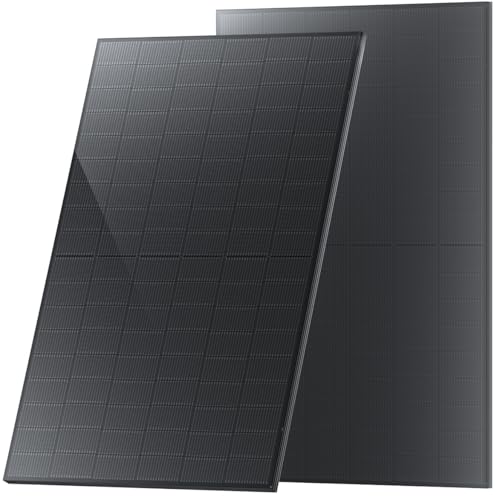
The STAR series brings a full-screen, frameless design that minimizes dust and water buildup. Each 435W panel uses 25% high-efficiency cells and is certified by multiple quality standards. The design promises reliable power generation even in challenging weather, with a potential power boost thanks to its unobstructed surface area. This option is particularly appealing for rooftop or flat installation where airflow and self-cleaning capability matter.
DOKIO 800W (2×400W) Solar Panels
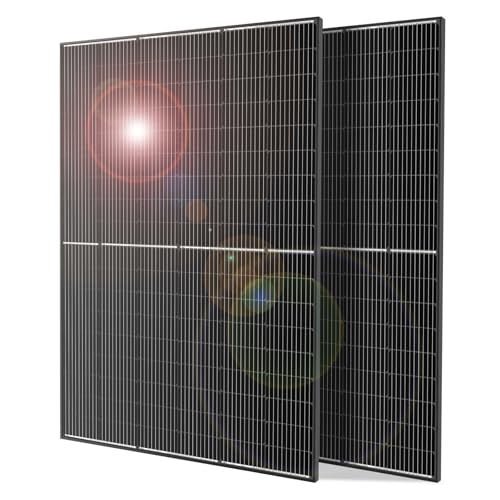
Two 400W DOKIO panels provide a total 800W capacity with practical 31V per panel. They emphasize parallel-first wiring for 12V systems to improve safety and steady charging, with the option to series-connect when your controller supports higher input. Each panel includes 3 m MC4 leads, reducing the need for extra extensions and simplifying layout for gardens, sheds, or portable setups. MPPT is strongly recommended for optimal performance.
DOKIO 400W Mono Panel (31V) for 12V/24V

This 400W mono panel delivers real-world performance with long built-in leads (3 m MC4). It is optimized for 12V systems when wired in parallel for smoother charging, while series configurations are possible with compatible high-input controllers. Real-world output depends on sunlight, heat, and shade conditions, so pairing with a capable MPPT controller is advised to close the gap between STC rating and actual performance.
SUNGOLDPOWER 500W Panel (UL61730)

The Sungoldpower 500W panels use Mono PERC Half-Cut technology with up to 21.05% efficiency. The UL61730 rating and IP68 waterproofing support reliable operation in outdoor environments, including RVs and marine applications. The design aims to maximize output per surface area, making it a strong option for compact roof spaces or portable solar arrays where space is at a premium and weather resistance matters.
Callsun 400W Quad-Pack Solar Panel

Callsun offers a true 400W output across four 100W modules, designed for 12V/24V/48V systems. This multi-panel configuration supports flexible setups for RVs, cabins, and off-grid farms, with emphasis on delivering consistent power while maintaining straightforward installation. The panels are positioned as a cost-effective solution that scales with energy needs while ensuring reliable performance across diverse environments.
Buying Guide
Key considerations when choosing a 365-watt class solar panel system include efficiency, form factor, and system compatibility. The following perspectives help balance performance with real-world constraints:
- Module technology and efficiency: Look for Mono PERC or N-type cells, half-cut designs, and efficiency in the 19–21% range to maximize output per square foot. Higher efficiency panels are especially beneficial for limited roof space on RVs or vans.
- Wiring and shade tolerance: Half-cell configurations and bifacial or parallel wiring strategies can improve performance under partial shading. Consider panels with robust shading tolerance if your installation is near trees or structures.
- Durability and weather rating: UL, CE, IP ratings, and warranty coverage indicate resilience in harsh outdoor conditions. Frameless or full-screen designs may offer reduced maintenance by limiting dust and water intrusion.
- System compatibility: Ensure the panel’s voltage (12V, 24V, or 48V configurations) aligns with your controller or inverter. MPPT controllers often maximize real-world output, especially in fluctuating temperatures.
- Installation context: Rooftop versus ground-mount, maritime use, or portable setups each have unique mounting, ventilation, and weight considerations. Panels with easier wiring and shorter extension needs simplify installation.
- Cost-to-output balance: While higher wattage panels save space, total system cost includes controllers, inverters, and wiring. A balanced 365–720W pairing can meet mid-range power goals efficiently.
Whether you are building a compact RV solar setup, topping off a tiny home, or powering a garden shed, these options offer solid performance in the around-365W class. Always pair panels with an appropriate MPPT charge controller and a suitable inverter to maximize efficiency and longevity.