For anyone upgrading home entertainment or computer audio, converting digital optical or SPDIF signals to a 3.5mm analog output can unlock compatibility with current speakers, headphones, and soundbars. The following selections offer reliable unidirectional conversions, high-resolution support, and straightforward setups suited for TVs, PCs, and gaming consoles. Each item converts digital audio to analog with careful attention to signal integrity and user experience.
Summary of selected products:
| Product | Brand | Key Strength | Notes |
|---|---|---|---|
| Tackston 192KHz Optical to 3.5mm Converter | Tackston | High fidelity optical-to-aux, up to 192kHz/24bit | Unidirectional from optical to AUX |
| 192KHz Optical to 3.5mm Converter (Another Tackston Model) | Tackston | Reliable PCM conversion with PCM/CD-quality output | Optical to AUX, same high sample rate |
| LiNKFOR 3.5mm to SPDIF Converter | LiNKFOR | Compact DAC with optical output from 3.5mm | 3.5mm to Optical, PCM output |
| PROZOR 192KHz Digital to Analog Converter | PROZOR | Dual-channel analog output and optical input | Includes L/R RCA and 3.5mm |
| eSynic 3.5mm to Optical Converter | eSynic | Unidirectional PCM conversion with robust housing | 3.5mm to Optical, 7ft cable included |
Tackston Optical To 3.5mm Converter (192KHz)
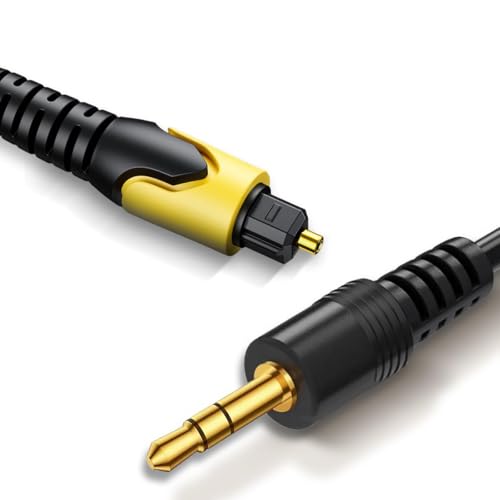
The Tackston device converts digital optical audio from a TV or other source into an analog 3.5mm output. It supports sample rates up to 192kHz/24-bit and works best for feeding speakers or headphones from optical sources. It is unidirectional (optical to AUX) and does not support reverse signal transfer. A note warns that TV remote volume control may not function during use; volume should be adjusted on playback devices.
Tackston Optical To AUX Converter (192KHz)

This model from Tackston also delivers 192kHz/24-bit optical-to-aux conversion. It accepts optical inputs at common sample rates (32/44.1/48/96/192kHz) and outputs via a 3.5mm jack to power speakers or headphones. Like the other Tackston option, it is unidirectional and does not allow 3.5mm-to-optical transfer. TV volume control may be limited, so adjust on the playback device.
LiNKFOR 3.5mm To SPDIF Converter

LiNKFOR’s device converts 3.5mm analog audio to a digital SPDIF optical signal, a unidirectional path designed to preserve high-quality PCM audio. It outputs up to 48kHz and 2-channel PCM with uncompressed digital audio. This is suitable for upgrading sound from a computer or other 3.5mm source to a soundbar or receiver with SPDIF input. It emphasizes fidelity in its digital-to-analog path and is compact for easy integration.
PROZOR 192KHz Digital to Analog Converter

PROZOR combines optical input with both L/R RCA and 3.5mm outputs, enabling flexible connections to speakers, amplifiers, or home theater components. It supports up to 192kHz/24-bit PCM audio and uses a dual-channel amplifier for improved clarity. The unit emphasizes upgraded chipset performance and lower distortion. Some setups may require adjusting TV output to PCM and handling volume on connected devices.
eSynic Portable 3.5mm To Optical Converter
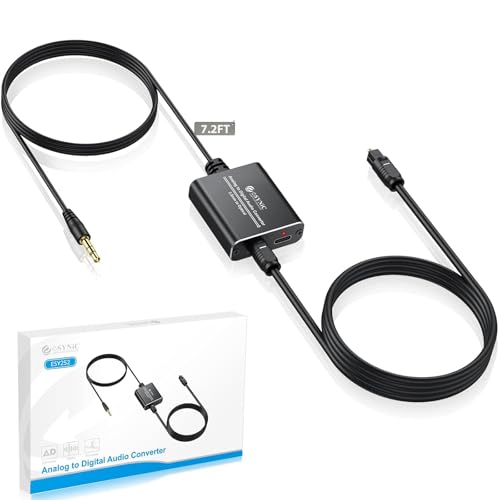
eSynic offers a uni-directional analog-to-digital path from 3.5mm to Toslink optical output, designed for laptops or projectors to drive soundbars. It emphasizes PCM compatibility and low-noise signal conversion with a compact 7-foot cable. This is a practical choice when you need a straightforward, portable converter that prioritizes simplicity and reliability in PCM contexts.
LiNKFOR 192kHz DAC Converter SPDIF To 3.5mm
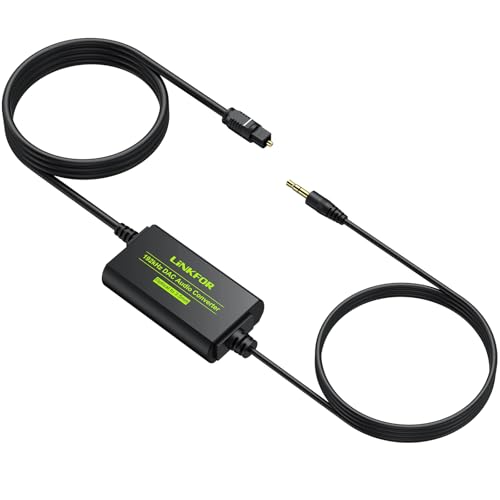
This LiNKFOR model converts SPDIF optical digital audio into a 3.5mm analog output, with built-in amplification for clean, usable headphone or speaker levels. It supports 192kHz sampling with 24-bit depth on incoming SPDIF streams, enabling high-fidelity playback. The package emphasizes a robust DAC with practical output scaling for home and studio use.
Luochahaishi Digital Coaxial to 3.5mm Converter

Luochahaishi provides a digital coaxial to analog 3.5mm conversion option. It targets devices with digital coaxial outputs and aims to deliver straightforward compatibility with SPDIF-enabled receivers, projectors, or sound systems. The cable and adapter build emphasize practical durability for home theater setups.
Buying Guide: Key Considerations When Choosing a 3.5mm To Digital Audio Converter
- Output direction: Most devices here are unidirectional (digital to analog). Confirm that you need optical/SPDIF to 3.5mm, not the reverse.
- Sampling rate and bit depth: Look for support up to 192kHz/24-bit for high-fidelity audio. Consider whether your source device’s maximum capability aligns with the converter’s specs.
- Input compatibility: Ensure the source interface (Toslink/optical, SPDIF coax) matches your TV, PC, or game console. Some models only support Toslink; others accept coax as well.
- Output compatibility: Realize whether you need a 3.5mm headphone jack, RCA outputs, or both. Some units offer dual outputs, increasing flexibility for amps and soundbars.
- Volume control: Some setups may not allow TV remote control to adjust playback volume. Plan to adjust volume on connected speakers or headphones.
- Power requirements: USB-powered devices are common, but some models may require external power. Verify power needs to ensure compatibility with your setup.
- Build and compatibility: Aluminum housings and chipsets with low distortion are typical advantages. Check user reviews for real-world performance in similar setups (TVs, PCs, or consoles).
- Installation simplicity: Plug-and-play designs with clear LED indicators help ensure a quick, driver-free setup.
- Firmware or feature limitations: Some converters support PCM only and do not handle Dolby or DTS formats. If you use surround formats, select a model that explicitly supports PCM or the desired format.
- Cable length and routing: For desktop or living-room layouts, ensure the included cable length matches your distance between devices and your preferred mounting positions.