Choosing a 24-channel sound mixer involves balancing input capacity, preamp quality, built‑in effects, and USB/SD options for recording and streaming. This guide highlights five top 24-channel mixers that cover church gatherings, live events, podcasts, and studio work. Each option brings distinct strengths, from premium mic preamps and versatile EQ to robust onboard effects and digital I/O. Explore models suited for large rooms, multi‑mic setups, and computer docking for multi‑track projects.
| Product | Brand | Key Strength |
|---|---|---|
| TKLBLS Professional Audio Mixer | TKLBLS | Dual DSP Reverb and independent 48V power per mic |
| 5 Core 24 Channel DJ Mixer | 5 CORE | Bluetooth/USB playback and 48V phantom power |
| Mackie ProFX22v3 | Mackie | Onyx preamps with USB I/O and GigFX |
| Mackie Onyx24 (Onyx Series 24-Channel) | Mackie | Multi-track USB 96kHz and SD card recording |
| Allen & Heath ZED-24 | Allen & Heath | Dual Preamp design with MusiQ EQ and USB I/O |
TKLBLS 24-Channel Mixer With Dual DSP Reverb
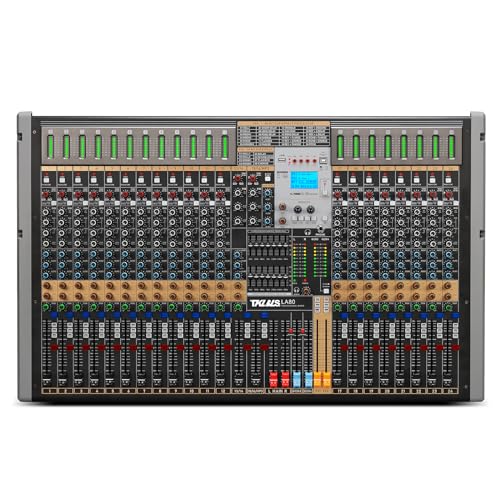
TKLBLS offers a 24-channel mixer designed for venues and studios needing robust mic handling and flexible effects. It features 20 mic inputs and 4 stereo inputs with balanced and unbalanced options. A notable benefit is independent 48V phantom power per mic input, which helps condenser mics stay stable and quiet in challenging environments. The mixer includes dual DSP processors with up to 24 reverb effects, allowing separate or combined reverb across channels for deeper soundscapes. This setup supports clear voice reproduction via dual 7-band EQ per channel and helps reduce noise from AC sources.
5 Core 24 Channel DJ Mixer With Bluetooth And USB

This 24-channel board from 5 CORE emphasizes Bluetooth 5.0 and USB connectivity for modern playback and PC recording. It supports a variety of audio formats via USB and offers 48V phantom power for condenser mics, along with a 3-band EQ to control tone. The inclusion of Bluetooth and USB makes it suitable for live events, small productions, and podcast workflows while enabling quick recording to a computer for post‑production or streaming setups.
Mackie ProFX22v3 22-Channel Analog Mixer

The Mackie ProFX22v3 focuses on versatility for live sound, home recording, and streaming. It comes with 17 Onyx mic preamps delivering clean gain and low noise, suitable for a wide range of vocal and instrumental mics. The mixer supports 24-bit/192kHz recording quality and features 2×4 USB I/O for custom computer mixes and monitoring. This makes it ideal for events that require precise on-stage monitoring or streaming with separate control of individual tracks. Onyx preamps and the GigFX effects engine provide a polished, studio-like finish.
Mackie Onyx24 24-Channel Analog Mixer

The Mackie Onyx24 is built for multi-track recording and professional workflow. It provides 96kHz/24-bit USB multi-track recording to Mac/PC and SD card stereo recording for portable sessions. Onyx mic preamps deliver up to 60dB of gain, complemented by Perkins British-style EQ for precise tonal shaping. A robust digital effects engine offers user-customizable reverbs and delays, enabling a polished result for performances, podcasts, and broadcast-ready mixes.
Allen & Heath ZED-24 24-Channel Mixer

The Allen & Heath ZED-24 emphasizes touring-grade build and musical sound shaping. It includes DuoPre XLR mic preamps with 48V phantom power and up to 69dB of gain, ensuring robust mic performance. A 100Hz high-pass filter on each mono input helps remove low-end rumble, while the MusiQ 3-band EQ with swept mids provides flexible tonal control. Its pre-fader and post-fader auxiliary outputs support monitor and FX routing, making it practical for live sound, small venues, and studio work with extensive routing needs.
Buying Guide
- <strongPreamps and Gain: Look for high-gain, low-noise mic preamps (Onyx or premium designs) to maximize vocal clarity, especially in live rooms with multiple mics.
- Input Count and Flexibility: Ensure at least 24 channels with a mix of mic and line inputs, plus instrument or line-level bays if needed for future expansion.
- Monitoring and Routing: Check pre/post-fader aux sends, subgrouping, and alt outputs to support stage monitors, subwoofers, and broadcast feeds.
- Digital I/O and Recording: USB I/O, multi-track recording, SD card, and compatibility with DAWs are valuable for podcasts and studio work.
- Effects and Processing: Built-in effects (reverb, delay, EQ) can reduce external gear, but evaluate the quality and routing flexibility for your application.
- Power Features: Independent phantom power per channel helps manage multiple condenser mics without crosstalk or noise.
- Durability and Size: Consider a mixer that can withstand transport if used for church services or touring gigs, while fitting your venue space.
- Budget vs. Value: Premium preamps and multi-track capabilities add cost; prioritize features most critical to your workflow.
These options cater to different needs: from venues requiring robust multi-mic handling and deep effects, to broadcasters and podcasters needing USB recording and computer integration. When evaluating, align features with your typical room size, microphone assortment, and whether you prioritize analog warmth or digital convenience.