Shopers seeking high-resolution, low-latency USB audio interfaces can rely on 192kHz models to capture vocals, instruments, podcasts, and streaming with broadcast-grade clarity. This guide highlights five standout options that balance ease of use, solid preamps, and broad compatibility. Each entry includes a quick look at core strengths to help you compare at a glance.
| Product | Resolution | Key Benefit |
|---|---|---|
| TISINO Audio Interface | 24-bit/192kHz | All-in-one podcast and recording kit with phantom power |
| PreSonus Studio 24c | 24-bit/192kHz | Two inputs, studio-grade preamps, includes Studio One |
| MAONO PS22 Lite | 24-bit/192kHz | High dynamic range for clear voice and instrument capture |
| JOLGOO USB Audio Interface | 24-bit/192kHz | Low-latency monitoring with dual inputs and phantom power |
| Focusrite Scarlett Solo (3rd Gen) | 24-bit/192kHz | Bright preamps and Air mode for transparent vocals |
TISINO Audio Interface 24Bit/192kHz

The TISINO USB audio interface integrates a condenser microphone power supply (48V phantom power), instrument input, and zero-latency monitoring in a single package. It targets podcasting, music recording, and streaming with plug-and-play simplicity for PC, Mac, or iOS. Its 24-bit/192kHz resolution supports studio-quality captures, while the 60dB gain preamp and HI-Z switch accommodate a wide range of microphones and instruments. The phantom power indicator helps users confirm active power, aiding workflow during live sessions or broadcasts.
Key features include two combo inputs (XLR/TRS), balanced main outputs, and a dedicated headphone output for monitoring. The integrated phantom power makes it suitable for condenser mics, while the HI-Z option supports instruments directly. This unit emphasizes ease of use, making it a strong starting point for those new to home studios who still want professional-sounding results.
Digiface USB 66-Channel 192 kHz USB Audio Interface

RME Digiface USB extends its classic HDSP Digiface with USB 2 connectivity and bus power, expanding I/O to support broader studio setups. It offers 66-channel potential via ADAT and S/PDIF inputs/outputs, along with SMUX compatibility for high-channel-count configurations. TotalMix routing provides flexible monitoring and routing options, enabling sophisticated signal paths for podcasts, multi-instrument sessions, and complex production workflows. This option is well-suited for studios requiring expandable I/O and precise control over monitoring mixes.
While more feature-rich and potentially larger in footprint, this interface emphasizes reliability and professional-grade routing. It’s ideal for users who anticipate growing their setup and need robust, scalable I/O with highly configurable monitoring paths.
PreSonus Studio 24c 2×2

The Studio 24c offers 2 inputs and 2 outputs with XMAX-L preamps, delivering clean, low-noise recordings. It supports 24-bit/192kHz capture, ensuring studio-grade fidelity for vocals and instruments. The unit ships with Studio One software, which provides an integrated environment for recording, editing, and mixing. Balanced TRS outputs enable direct connection to professional studio monitors, making it a practical choice for desktop studios and content creators focused on audio quality for music and voice work.
Its compact design and solid build are complemented by direct monitoring and straightforward controls. This makes the Studio 24c a reliable choice for podcasters, musicians, and streamers who want a dependable, all-in-one solution with a familiar software ecosystem.
MAONO USB Audio Interface PS22 Lite

The MAONO PS22 Lite delivers 24-bit/192kHz recording with a dynamic range up to 106dB, designed for mic enthusiasts, podcasters, and streamers. It supports condenser and dynamic mics with up to 56dB of preamp gain and offers 48V phantom power for studio-grade mic compatibility. The interface emphasizes clarity and warmth in voice capture, making it suitable for voiceovers, podcasts, and music recording. Its compact form factor supports on-the-go setups and easy integration with PC or Mac.
With separate instrument input and dedicated routing options, users can record guitars or other instruments with ease. The PS22 Lite focuses on delivering a practical, user-friendly pathway to high-quality sound without the complexity of more feature-heavy interfaces, appealing to hobbyists and content creators seeking reliable performance.
JOLGOO USB Audio Interface For Recording
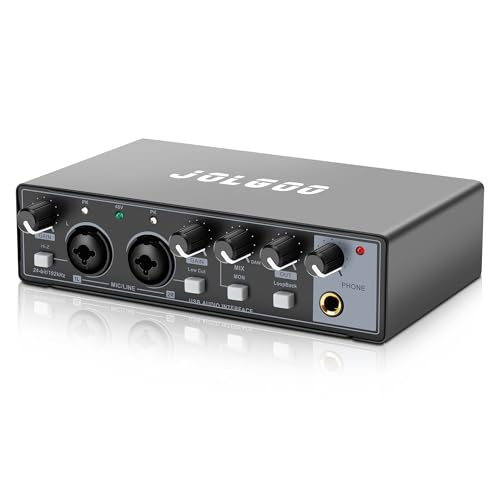
JOLGOO’s USB audio interface emphasizes studio-grade sound with 24-bit/192kHz resolution and ultra-low latency monitoring. It features two XLR/LINE inputs with phantom power via 48V and a dedicated instrument input, offering flexible routing for vocals, guitar, or keyboard. The interface is USB-powered, reducing clutter and enabling quick setup for home studios, podcasters, and live streams. Its front-panel controls and indicators help monitor input levels and prevent clipping during fast-paced sessions.
Designed for both beginners and seasoned users, JOLGOO focuses on straightforward operation without sacrificing audio quality. The combination of phantom power for condensers, a HI-Z option for instruments, and balanced outputs makes it suitable for a wide range of recording scenarios.
Focusrite Scarlett Solo 3rd Gen

Focusrite Scarlett Solo 3rd Gen is known for its bright, clear preamps and the Air mode, which adds openness to acoustic recordings. It has two input channels: one high-quality mic preamp and one instrument input, with up to 24-bit/192kHz conversion. The Gain Halos around the preamps help users visually monitor input levels to avoid clipping. This unit emphasizes ease of use for guitarists, vocalists, podcasters, and producers who want professional-sounding results with a straightforward interface.
The Scarlett Solo balances compact size with robust performance, offering dependable drivers and compatibility with major DAWs. It’s a strong choice for creators seeking a go-to, no-nonsense interface that still delivers studio-quality recordings.
Buying Guide: What to Consider When Choosing a 192kHz USB Audio Interface
- Resolution and dynamic range: Look for at least 24-bit/192kHz support to capture detail in vocals, acoustic instruments, and effects. Higher dynamic range reduces noise and hiss in quiet passages.
- Inputs and outputs: Choose a model with the right I/O for your setup. If you need to record two singers, a simple 2-in/2-out interface is enough; for multi-instrument recording, consider interfaces with additional ADAT or USB-C expansion options.
- Preamps and phantom power: High-quality mic preamps with sufficient gain are essential. If you plan to use condenser mics, ensure 48V phantom power is available and reliably implemented.
- Latency and monitoring: Zero-latency or near-zero monitoring prevents monitoring delays during recording. Look for direct monitoring and well-implemented software monitoring options.
- Compatibility and drivers: Ensure the device works with your computer’s operating system and DAW. USB class-compliant designs are often the most straightforward, but some interfaces benefit from dedicated drivers or bundled software.
- Portability and power: If you travel or record away from a mains supply, USB-powered interfaces are convenient. Battery-powered options are less common for audio interfaces, so plan power needs accordingly.
- Software and ecosystem: Some interfaces include bundled DAWs, loops, or plug-ins. Consider whether the bundled software adds value for your workflow.
- Build and durability: Metal chassis and sturdy knobs contribute to long-term reliability, especially for portable recording rigs or busy studio environments.
- Future-proofing: If you anticipate expanding your setup, opt for interfaces with expandability (e.g., ADAT, multiple USB ports) to accommodate more channels without a full upgrade.
In choosing among these options, align features with your primary use—podcasting and voice work, home music production, streaming, or professional-sounding demos. Each of the highlighted models offers reliable 192kHz performance, good preamps, and practical routing that can elevate the quality of your recordings without requiring pro-level gear.