Finding a reliable 12V/48V phantom power supply is essential for condenser microphones, shotgun mics, and portable recording setups. The following selections cover a range of needs—from compact, USB-C powered models to rechargeable units that run in the field. Each option is compatible with common XLR mics and designed to minimize noise while delivering stable phantom power. Use this guide to compare features, battery life, and form factor to fit your studio or live workflow.
| Product | Brand | Power Options | Key Strength |
|---|---|---|---|
| PM48 | FIFINE | 48V via power supply; USB-C data cable | Solid build, wide compatibility, Type-C connectivity |
| P1 | Xvive | 24V/48V; rechargeable battery | 40 hours battery life, ultra-portable |
| PS400 | MDYFVI | 12V/48V | Ultra-compact, flexible input/output |
| NEEWER 1-Channel | NEEWER | 48V | Includes XLR cable; reliable single-channel power |
| StudioMan PS200 | StudioMan | 12V/24V/48V; dual-channel | Two mics simultaneously; durable build |
The following sections highlight five standout models that align with common recording scenarios: studio work, field reporting, live streaming, podcasting, and small-band setups. Each product is presented with a concise overview of its power options, notable design choices, and how its features support noise-free, reliable microphone operation.
FIFINE PM48: Compact USB-C Powered 48V Phantom

FIFINE’s PM48 provides a sturdy, metal-bodied phantom power solution with a 48V output for condenser mics and related recording equipment. Its design emphasizes portability and durability, suited for both indoor studios and outdoor performances. The device ships with a universal XLR input/output path and includes a 3.5-foot USB-C data cable, enabling easy connection to computers and other USB-C devices while maintaining stable power delivery. This model favors users seeking reliability, broad compatibility, and a compact footprint that travels well.
Xvive P1 Phantom Power Supply
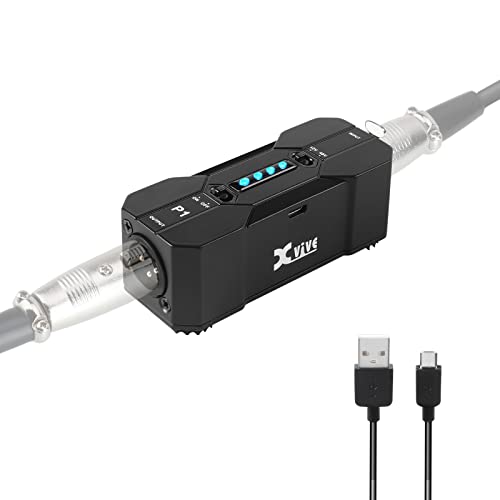
The Xvive P1 is designed for mobility and long-running sessions, offering both 48V/12V operation and an internal rechargeable battery that can power condenser mics for up to 40 hours. Its compact dimensions (about 1.7” x 1.3” x 4.1”) make it ideal for on-the-go podcasts, field recording, and mobile studios. A quick charge time of 2.5–3 hours means minimum downtime between takes. The P1 features a professional chip design that minimizes noise and interference, helping to preserve audio fidelity in diverse environments.
MDYFVI PS400: Ultra-Compact 12V/48V

MDYFVI’s PS400 focuses on ultra-compact flexibility for condenser mics and other 12V/48V devices. Its simple MIC INPUT → MIC THRU route minimizes latency and ensures a clean signal path through to mixers or computers. The selectable 12V or 48V output makes it adaptable for different microphone models and workflows, delivering low-noise, full-frequency performance in a slim form factor suitable for mobile studios or travel setups.
NEEWER 1-Channel 48V Phantom Power

NEEWER’s single-channel unit delivers dependable 48V phantom power in a compact housing. It features universal XLR input and output, enabling straightforward connection to condenser mics and mixers. The package includes a high-quality XLR cable, which adds value for users who want a ready-to-use setup immediately. This model is well-suited for desktop studios, voiceover work, and solo podcast configurations where only one microphone needs reliable phantom power.
StudioMan PS200: Dual-Channel Phantom Power

StudioMan’s PS200 provides dual-channel phantom power, allowing two condenser microphones to be powered simultaneously. It supports 12V, 24V, and 48V with a robust build that suits both studio desks and on-location shoots. The unit includes dedicated MIC-1 and MIC-2 inputs and outputs, simplifying multi-mic setups for podcasts, interviews, or small ensemble recordings. The combination of reliability and flexible voltage selection makes it a practical choice for expanding microphone racks without constantly rerouting power.
Buying Guide: Key Considerations For Phantom Power Purchases
When choosing a phantom power supply, consider these factors to align with your use case and gear ecosystem:
- Voltage range: Most condenser mics require 48V, but some devices and shotgun mics can use 12V. If you own multiple mic types, a unit with switchable 12V/48V is advantageous.
- Channel count: Single-channel units are fine for solo setups, while dual-channel or multi-channel models simplify multi-mic configurations for interviews and small groups.
- Portability: For field recording, battery-powered or USB-C powered units offer freedom from wall outlets. Indoor studios benefit from compact, durable housings.
- Power stability and noise: Look for units with low-noise design and solid shielding to minimize hum and interference, ensuring clean microphone signals.
- Connectivity: Universal XLR I/O is standard, but consider additional cables or included accessories that reduce setup time.
- Battery life and charging: Rechargeable options should advertise real-world runtime and fast charging behavior to minimize downtime.
- Build quality: A metal chassis tends to be more durable for travel and live use than plastic housings.
- Compatibility: Ensure the unit is compatible with your mics, mixers, audio interfaces, and any other gear in your chain.
- Portability vs. features: Heavier, feature-rich units may offer more power options but at a higher weight. Balance needs against the travel footprint.
In practice, stage or field applications benefit from rechargeable or battery-powered units, while home studios often prioritize compact, reliable wall-powered designs with dual-channel options for efficient workflows. Noise performance matters most when capturing voice and acoustic instruments, so prioritize models with good shielding and robust connectors. For users who rely on both home and road setups, a versatile 12V/48V device with multiple channels and USB connectivity provides the broadest compatibility with minimal gear changes.