Choosing the right 10/1000 network card can boost wired connectivity for gaming, streaming, and data-intensive tasks. This guide highlights five solid options that support Gigabit and 10 Gigabit Ethernet, with attention to compatibility, installation, and performance features. Each product includes a quick visual reference and core capabilities to help you compare at a glance.
| Product | Brand | Rating (approx) | Key Speed Range | Interface |
|---|---|---|---|---|
| TP-Link TX401 | TP-Link | High | Up to 10 Gbps | PCIe x1 |
| GigaPlus 10Gbe PCIe | GigaPlus | High | Up to 10 Gbps | PCIe |
| YuanLey 10G PCIe | YuanLey | High | Up to 10 Gbps | PCIe |
| EDUP Gigabit PCIe | EDUP | Medium-High | Up to 1 Gbps | PCIe |
| IO CREST 2.5G PCIe | IO CREST | Medium-High | Up to 2.5 Gbps | PCIe |
TP-Link TX401 10Gb PCIe Card
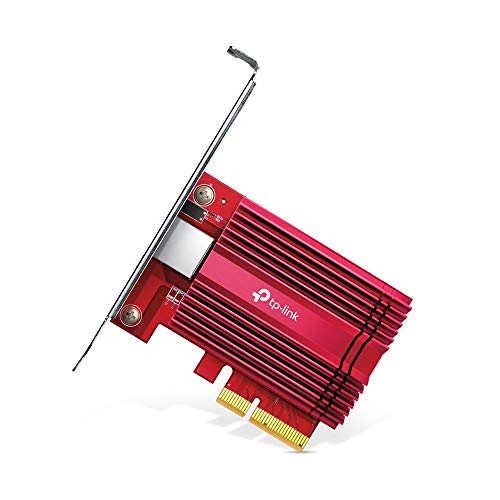
The TP-Link TX401 is a 10 Gbps PCIe network card designed to deliver extremely fast data transfers for demanding tasks. It uses 10GBase-T technology to reach speeds up to 10 Gbps, making it significantly faster than standard Gigabit adapters. It is compatible with Windows and Linux servers, and it supports automatic speed negotiation to accommodate various network environments. QoS features help prioritize gaming traffic and reduce latency during peak activity. The TX401 is ideal for power users, small to medium servers, and high-bandwidth workstations seeking robust, low-latency performance.
GWFIBER [Upgrade] PCIe Ethernet Card

This PCI-Express network card supports 10/100/1000 Mbps, offering flexible compatibility across Windows and Linux environments. It advertises PXE support and Wake-on-LAN for remote management and reduces driver maintenance by providing driver-free operation on Windows 10/11 in some cases. The card is designed for a broad set of systems—from industrial PCs to standard desktops—making it a versatile option for users who need dependable, low-latency Ethernet connectivity across diverse hardware configurations.
GigaPlus 10Gbe PCI-e Network Card

The GigaPlus 10Gbe PCIe card uses a Marvell AQtion controller to deliver up to 10 Gbps through a PCIe-based interface. It converts PCIe X1/X4/X8/X16 slots into a 10GBASE-T Ethernet port, enabling high-speed network connectivity for data centers, servers, and high-performance workstations. The kit includes standard and low-profile brackets to fit both full-size towers and compact chassis, offering straightforward installation for varying server or PC builds. It is optimized for stable, low-latency data transfer and reduces packet loss under heavy load scenarios.
YuanLey 10G PCIe Base-T Card
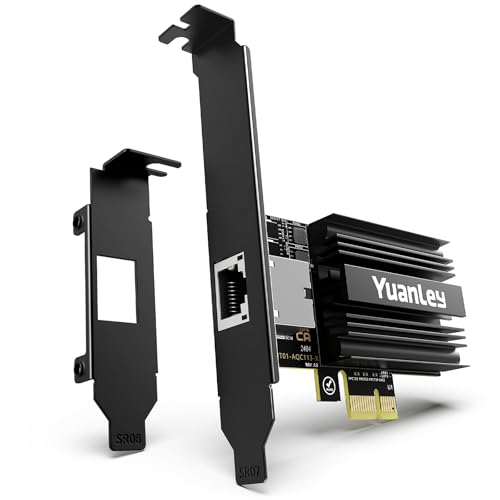
The YuanLey 10G PCIe network card relies on a Marvell AQC113 controller and PCIe 4.0 x1 interface to support 10GBASE-T as well as 5G, 2.5G, and 1G speeds. It fits PCIe X1, X4, X8, and X16 slots and ships with full-height and low-profile brackets for flexible deployment in desktops and servers of different sizes. This card is designed for gamers, streamers, and enterprise users who require rapid, scalable Ethernet connections without compromising compatibility, especially in mixed-speed networks.
EDUP Gigabit PCI Express Network Card

The EDUP Gigabit PCIe network card adds a 10/100/1000 Mbps Ethernet port via PCIe, supporting a wide range of Windows and Linux operating systems. It is compatible with PCI Express x1 to x16 sockets and includes an optional low-profile bracket for smaller builds. The card adheres to standard Ethernet protocols and VLAN tagging, enabling straightforward integration into existing networks. It targets users needing a simple, cost-effective upgrade to wired Ethernet performance without advanced configuration.
TP-Link 2.5G TX201 PCIe Card

The TP-Link TX201 brings 2.5 Gbps performance, offering a balance between traditional Gigabit and full 10G solutions. It is backward compatible with 2.5G, 1G, and 100 Mbps standards and includes QoS features to prioritize gaming traffic. Supporting Windows and Linux, this card is a practical option for users seeking a cost-efficient upgrade that still delivers noticeably higher speeds than standard Gigabit adapters, particularly for modern desktops and workstations.
Buying Guide: Key Purchase Considerations
- Speed and use case: If you need multi-gig performance for servers or bandwidth-heavy tasks, consider 10GBASE-T cards (10 Gbps) like the TP-Link TX401 or GigaPlus. For general upgrades to faster networks, 2.5G cards like TX201 or 2.5G IO CREST can offer meaningful improvements without the cost of true 10G.
- PCIe slot compatibility: Check which PCIe slots your motherboard provides (x1, x4, x8, x16). Most 10G and 2.5G NICs support multiple slots, but full-height/full-profile vs. low-profile brackets may be needed for compact cases.
- CPU and motherboard support: Ensure your system’s CPU and chipset can handle high-speed NIC throughput and that drivers are available for your OS version (Windows, Linux, or others). Some cards offer driver-free operation on certain Windows builds, while others rely on downloadable drivers.
- Backward compatibility: Many cards negotiate speeds automatically (10 Gbps, 5 Gbps, 2.5 Gbps, 1 Gbps, 100 Mbps). This is important if your network contains devices at different speeds or if you plan to upgrade gradually.
- QoS and traffic prioritization: If gaming or latency-sensitive applications matter, look for cards with Quality of Service features to minimize congestion and ensure steady performance.
- Form factor and installation: Decide between full-height and low-profile cards based on your chassis. Some cards come with both brackets to ease installation in various builds.
- Power and cooling: High-speed NICs can generate more heat; ensure adequate airflow in servers or desktops that host multiple high-throughput NICs.
- Brand and support: Reputable brands often provide longer software support, reliable firmware updates, and easier access to drivers across Windows and Linux environments.
When selecting a network card for a 10/1000 Mbps environment, weigh the need for maximum speed against cost, compatibility, and existing hardware. For most users upgrading from Gigabit Ethernet, a 2.5G or 5G option may deliver the best blend of performance and value. For data centers, workstations, and servers handling large file transfers or high-resolution streaming, a true 10GBASE-T card will offer the most tangible gains.